

All the sites at a glance
| Site | Area | Depth | Suits |
|---|---|---|---|
| HMNZS Canterbury | Deep Water Cove | 14–36m | Open Water with an instructor, Advanced |
| White Reef | Deep Water Cove | 2–27m | Everyone, snorkellers too |
| Disco Bay | Deep Water Cove | 5–15m | Beginners and training |
| Ascidian Archway | Deep Water Cove | 3–20m | Open Water |
| Motuwheteke Island | Deep Water Cove entrance | 10–40m | Open Water to Advanced |
| Putahataha Island | Cape Brett | 10–25m | Open Water, Advanced |
| Keyhole Cave | Cape Brett | 5–20m | Open Water |
| Kariparapa Point | Cape Brett | 12–25m+ | Advanced |
| Big Eyes Lair and Sonic Boom Cave | Cape Brett | 14–24m | Advanced, torch needed |
| Cathedral Cave | Hole in the Rock | 10–30m | Advanced |
| The Dog | Hole in the Rock | to 35m+ | Advanced, current |
| Bird Rock | Cape Brett | to 40m | Experienced |
| Piercy’s Backside | Piercy Island | 20–42m | Experienced, current |
| Frenchmans Reef | Moturua Island | 8–12m | Beginners and training |
| Rainbow Warrior | Cavalli Islands | 18–26m | Open Water with an instructor, Advanced |
| Neptune’s Garden | Cavalli Islands | to 20m | Open Water |
| The Tunnels | Cavalli Islands | 10–14m | Open Water |
| The Teapot | Cavalli Islands | 10–26m | Open Water, Advanced |
| Croc Rock | Cavalli Islands | to 30m+ | Open Water, Advanced |
| True Love Reef | Cavalli Islands | to 42m | Advanced, current |
| Matauri Bay | Shore dive | to 12m | Training, beginners |
The wrecks
HMNZS Canterbury
Deep Water Cove · 14–36m · Open Water with an instructor, Advanced
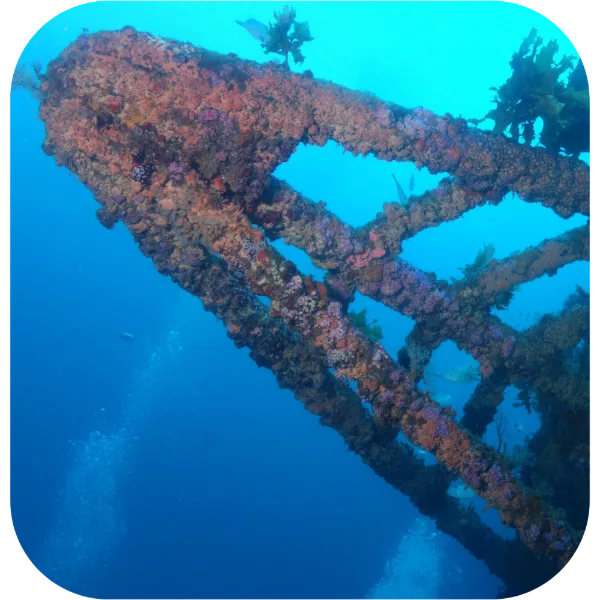
A 113-metre navy frigate sunk in 2007, now covered in jewel anemones and sponges, with hundreds of crayfish in winter. The top of the wreck is at 14m and her decks at 22–28m. Read the full Canterbury guide.
Rainbow Warrior
Cavalli Islands · 18–26m · Open Water with an instructor, Advanced
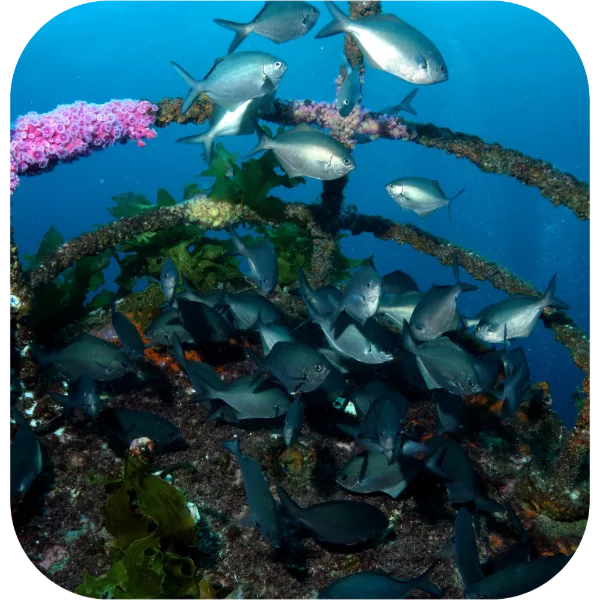
The Greenpeace flagship, scuttled off Matauri Bay in 1987. She is now a kaleidoscope of colour with outstanding macro life and a resident school of golden snapper. Read the full Rainbow Warrior guide.
Deep Water Cove
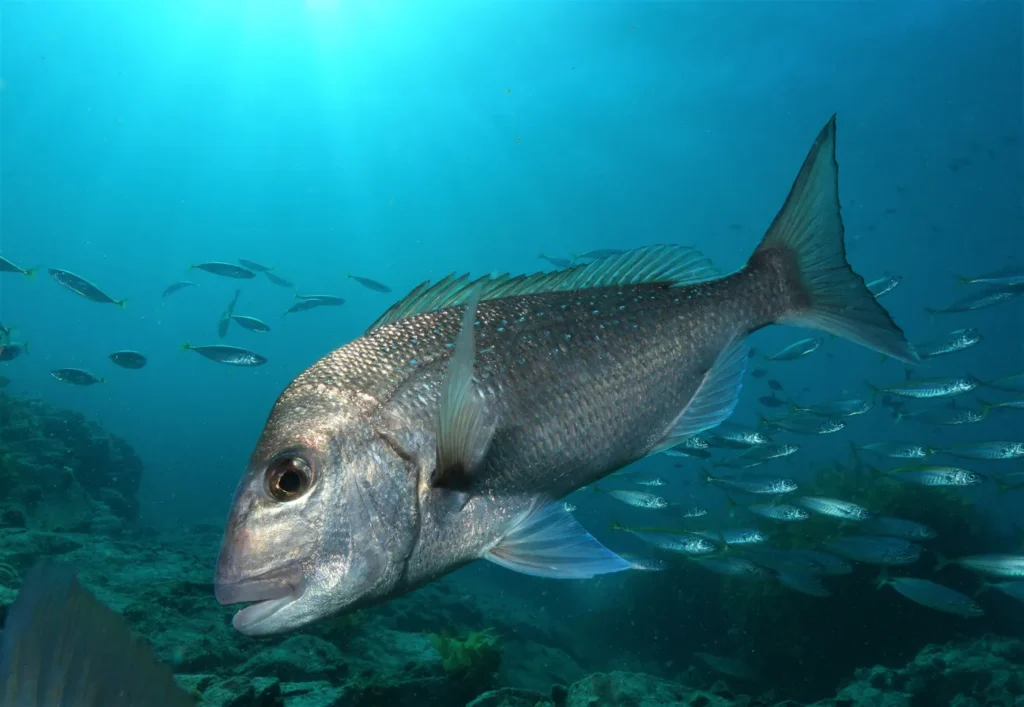
Maunganui Bay, known to divers as Deep Water Cove, has been closed to fishing under a rāhui placed by Ngāti Kuta and Patukeha since 2010. The recovery shows on every dive: bigger snapper, more crayfish, and reefs that have grown back over what used to be kina barrens. It’s sheltered, so it’s often diveable when the outer coast isn’t.
White Reef
2–27m · Everyone
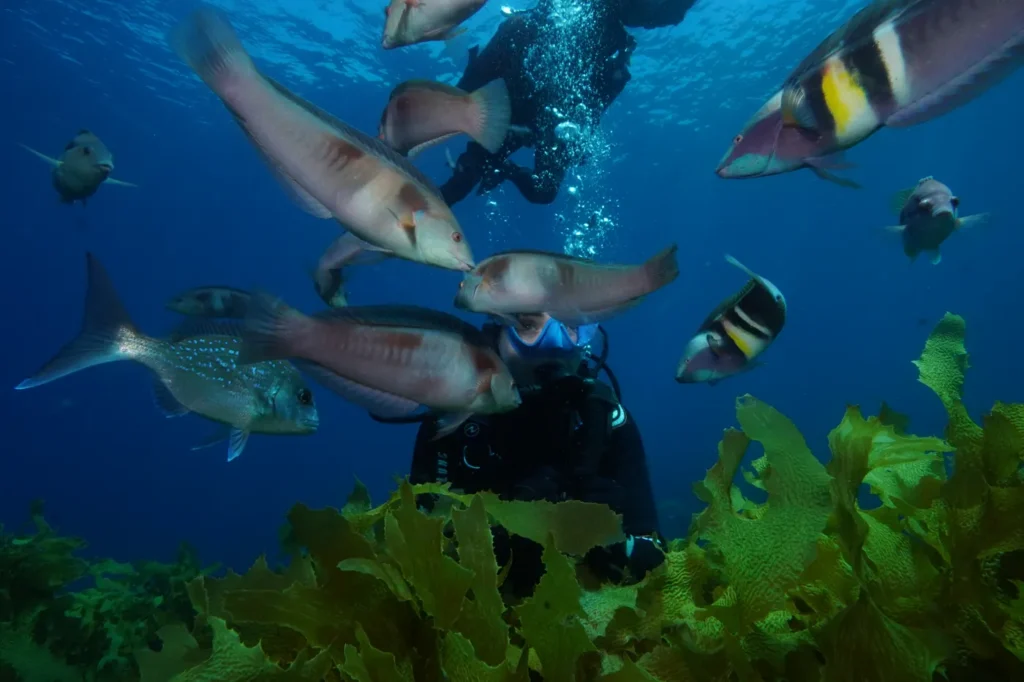
Named for the pale rock it’s made of, White Reef is the clearest example of what the rāhui has done. Once bare kina barren, it’s now almost completely covered in healthy reef life. It shelves gently from 2m, so it suits new divers and snorkellers as well as anyone wanting a relaxed second dive.
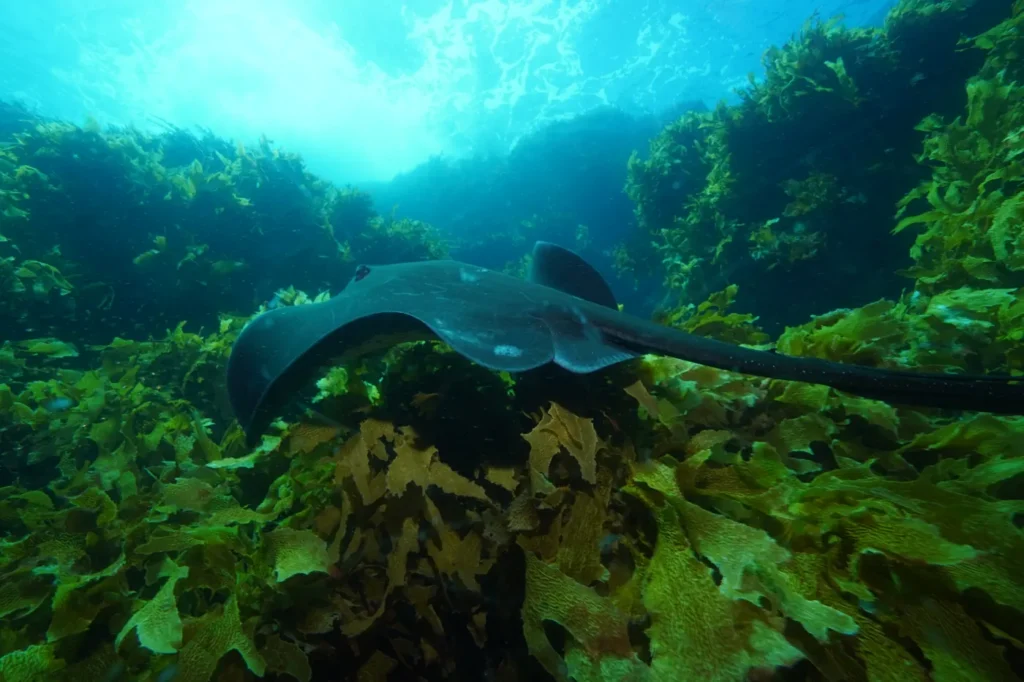
Disco Bay
5–15m · Beginners
A sandy bay edged by reef on both sides, around 5m near the beach and sloping to 15m. It’s protected from boat traffic, which makes it our go-to for navigation training and first open-water dives.
Ascidian Archway (Power Point)
3–20m · Open Water
A small peninsula on the south side of Deep Water Cove, with an archway you can swim through at 3–5m depending on the tide. On the north side the reef slopes to 20m, with sandy patches in between.
Motuwheteke Island
10–40m · Open Water to Advanced
The island on the southern side of the entrance to Deep Water Cove. The outer edge, from the north-west round to the south-west, is the deep side. On the inner, north-eastern side the reef drops to 35–40m, then shallows to 10–12m in the channel, so there’s a dive here for most levels.
Cape Brett and Hole in the Rock
Out towards Cape Brett and Hole in the Rock the coast gets bolder: caves, swim-throughs, pinnacles and sheer walls dropping into deeper, bluer water. These sites depend more on the weather and the current, and several suit Advanced divers.
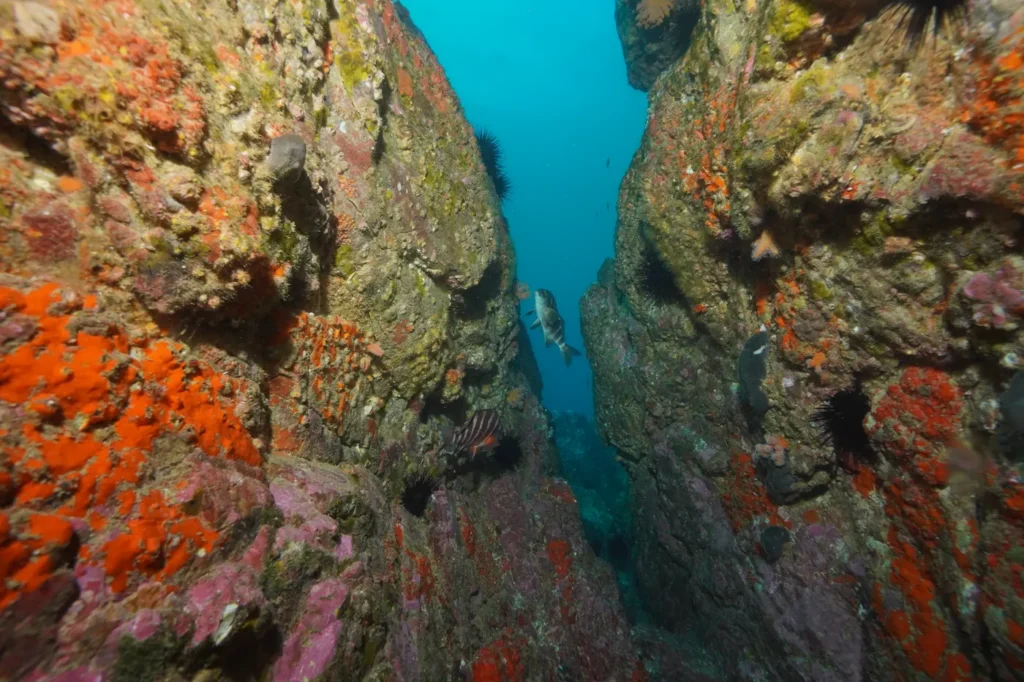
Putahataha Island
10–25m · Open Water, Advanced
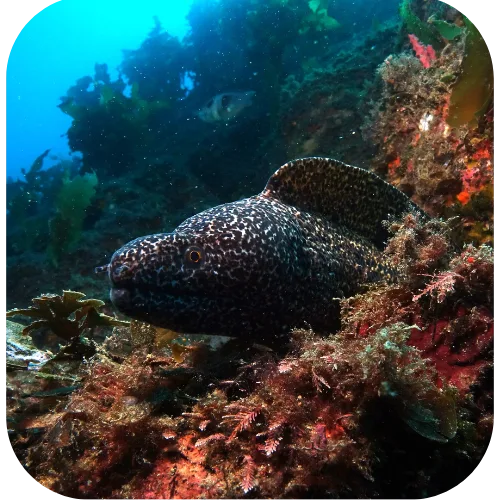
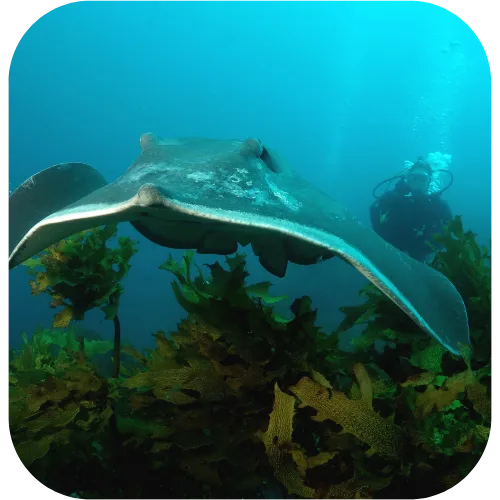
Rocky, kelpy reef at around 10m on the inshore side, dropping to 18–25m on the seaward side as you work around the island. The highlight is an underwater cavern about 5m wide at its entrance, at 13–15m. Look for painted moki, scorpionfish, spotted and yellow morays, bigeyes, rays, kingfish and big snapper. In winter the bluebell tunicates bloom and draw in clown nudibranchs.
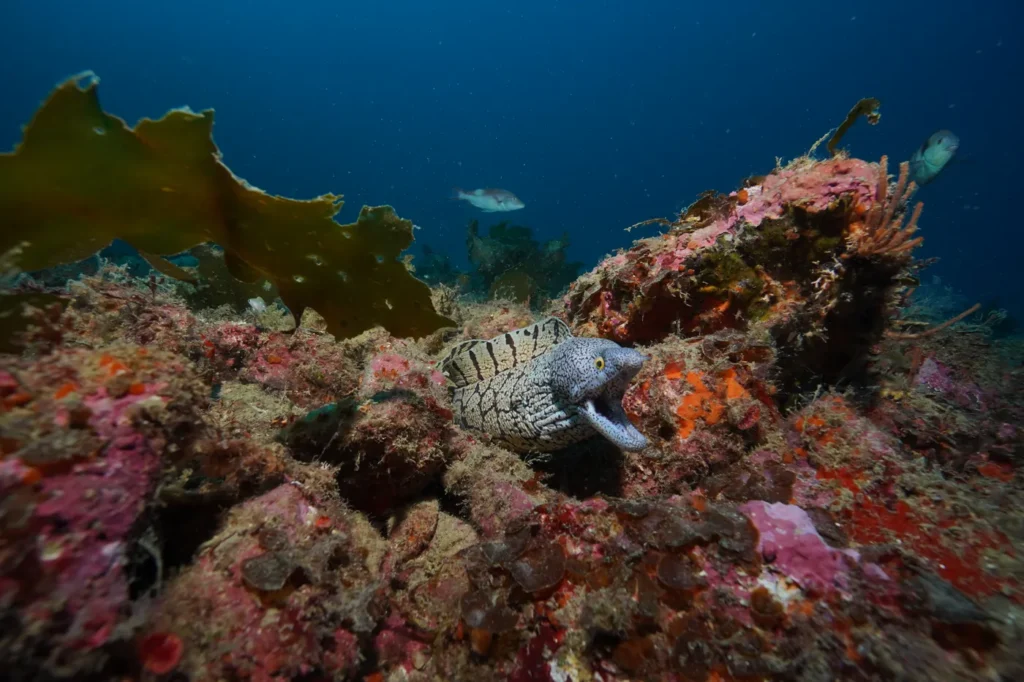
Keyhole Cave
5–20m · Open Water
Named for the shape of the cave, which looks just like a keyhole. Around it, colourful boulders and walls sit in 5–20m, with rays, crayfish, scorpionfish and schooling fish.
Kariparapa Point
12–25m+ · Advanced
A long rock finger runs out from the point, starting at 12m and dropping to 25m before it falls away further. There’s a swim-through near the deep end, and big boulders and a small cavern closer inshore.
Big Eyes Lair and Sonic Boom Cave
14–24m · Advanced, torch needed
Big Eyes Lair is a natural tunnel around 35m long, entered at 24m and coming out at 18m into kelpy boulders. It’s packed with bigeyes, so bring a torch. Close by, Sonic Boom Cave is a narrow cave where swell booming at the back can be heard before you see it. We only go in on calm days.
Cathedral Cave
10–30m · Advanced
A huge sea cave inside Hole in the Rock (Motukokako), open to the surface. The floor is around 28–30m at the entrance and rises to 10–12m at the back, where stingrays gather. The walls are covered in anemones and nudibranchs.
The Dog
to 35m+ · Advanced, current
Just inside the Hole in the Rock area, The Dog is a sheer vertical wall dropping past 35m. The current can run hard here, so we choose our moment. The encrusting life on the wall is incredible, big schools of fish sweep past, and it’s one of the sites where we often see bronze whaler sharks.
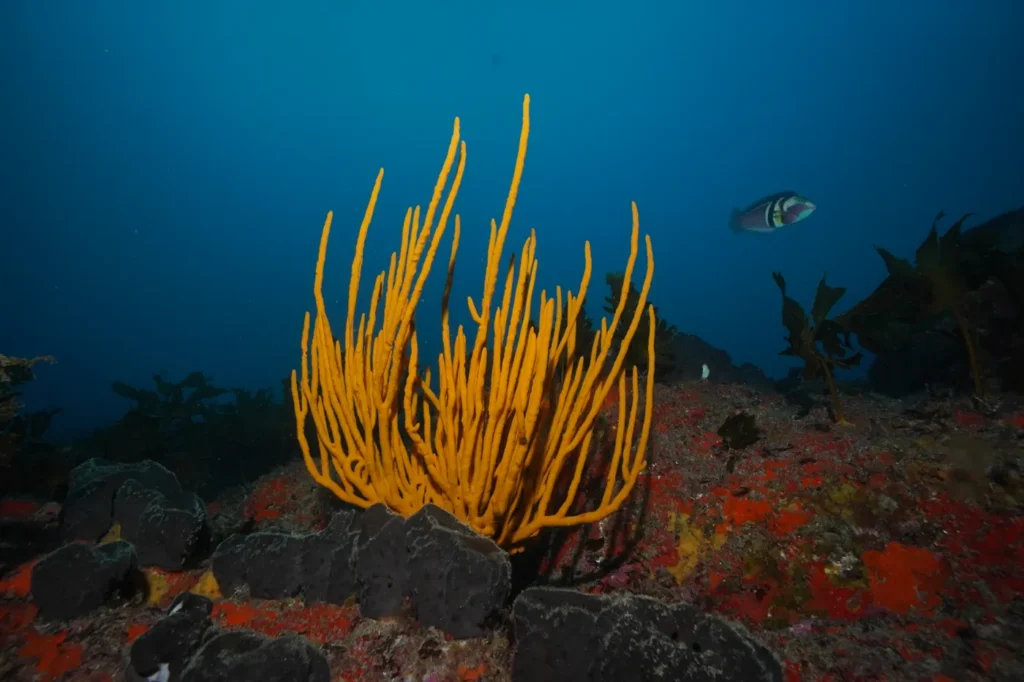
Bird Rock
to 40m · Experienced
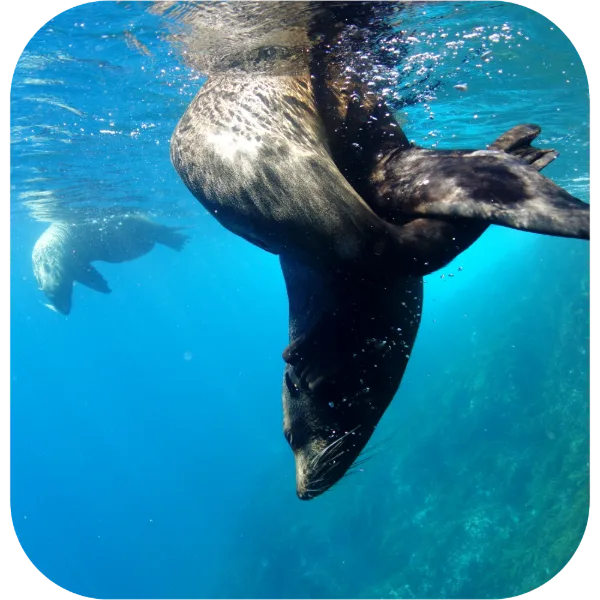
A large rock off Cape Brett with walls sloping to 30–40m on every side. In winter seals sometimes use the rock and come into the water to check out divers. Currents can be strong.
Piercy’s Backside
20–42m · Experienced, current
The north-east face of Piercy Island (Motukokako). We anchor in a deep bay at 20–22m, and the reef drops quickly to 35–40m, with the wall running out to the point at 42m. Strong current on this northern side makes it a dive for experienced divers.
Around the islands
Frenchmans Reef
8–12m · Beginners and training
On the western side of Moturua Island, around the corner from Frenchman’s Bay and Hospital Bay. A shallow reef that breaks the surface and drops to 8–12m, with a small cave tunnel through the middle. It’s a great shallow reef dive and one we often use for diver training.
Cavalli Islands
The Cavallis sit just off Matauri Bay, north of the Bay of Islands. They’re volcanic, so the reef is full of tunnels, arches and swim-throughs, and schooling fish are everywhere. We dive them on our Rainbow Warrior trip, with lunch on a Cavalli beach between dives.
Neptune’s Garden
to 20m · Open Water
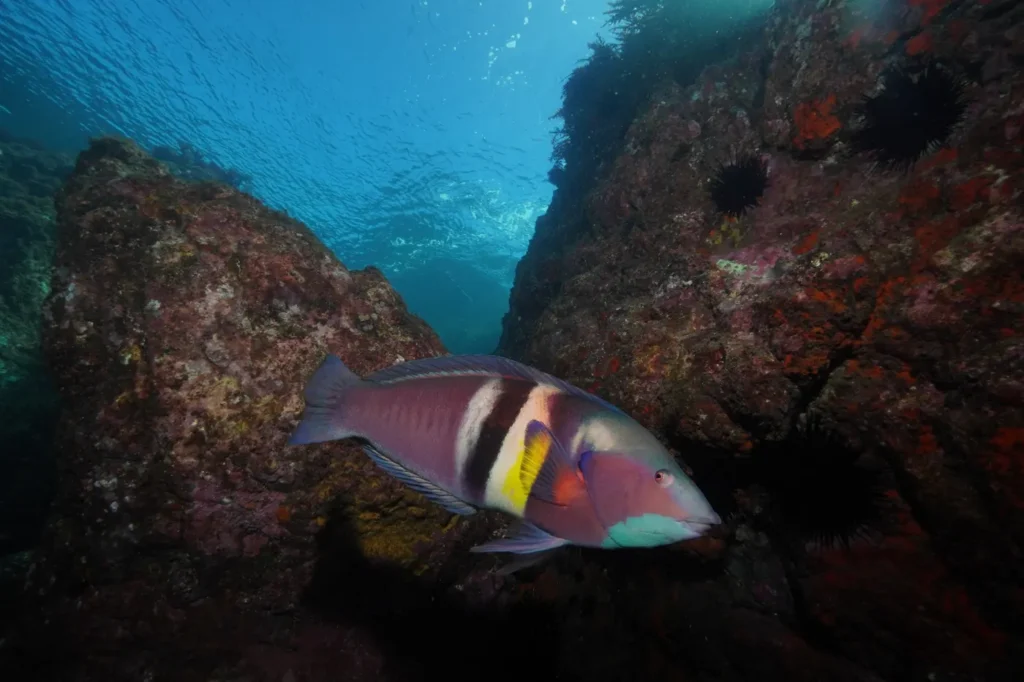
A reef in the north-east of the islands, with winding routes through boulders and valleys that lead to a wall on the north-western side, reaching 20m. It lives up to its name, with sponges and encrusting life framed by ecklonia kelp. Wrasses, snapper and morays are regulars, and the macro life is excellent.
The Tunnels
10–14m · Open Water
At Motuharakeke (Flax) Island, dived from the north-west or south-west. There are two tunnels: one at 14m under a small outcrop on the north-west side, and one that cuts right through the island at 10m. Expect wrasses, leatherjackets, snapper, eagle rays and several kinds of eel.
The Teapot
10–26m · Open Water, Advanced
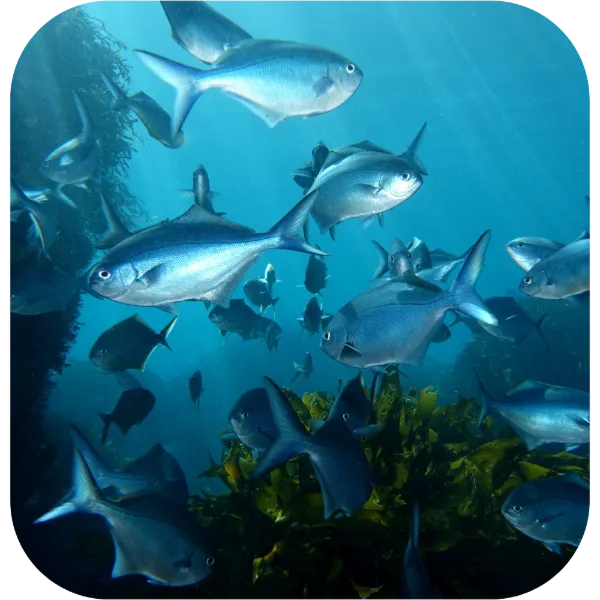
At Motutakupu Island. We usually anchor on the western side in 10m, over a shallow reef with a good current running across it that brings in schools of blue maomao, trevally, koheru and kingfish. There’s a patch of kina barren where the scorpionfish and morays come in close. From there we cruise around the southern end of the island, where a wall drops to 18–26m. Out on the point you can meet big schools of kingfish, trevally, kahawai and blue maomao, with pink maomao deeper down. Good encrusting and macro life, and one of our favourite afternoon dives.
Croc Rock
to 30m+ · Open Water, Advanced
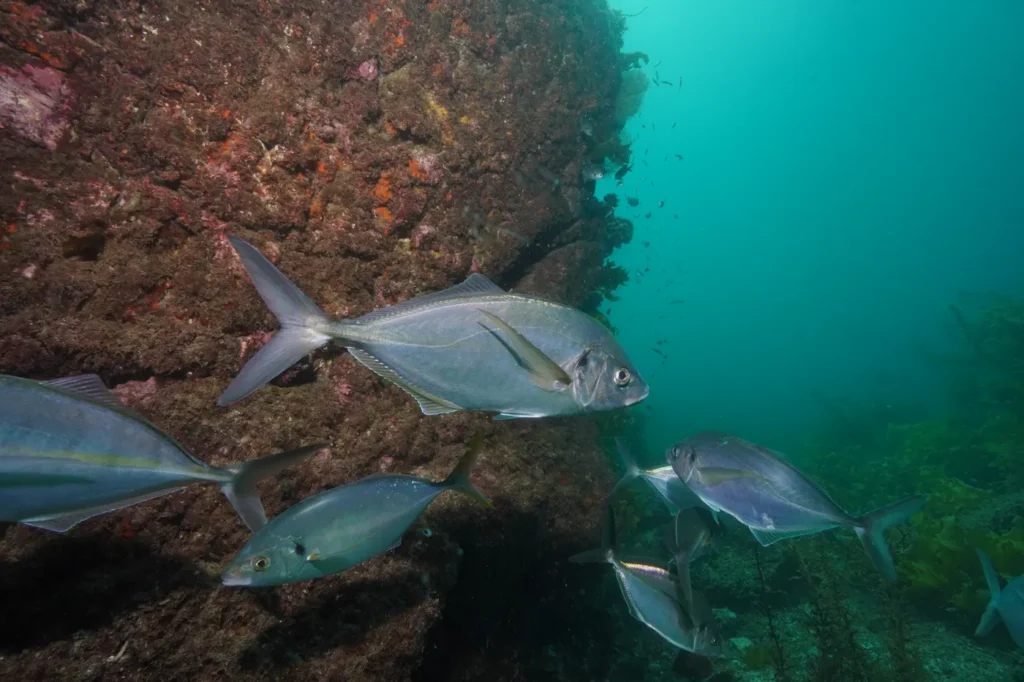
Two minutes north of the Rainbow Warrior on the edge of the Cavallis. Enter shallow on the south-west side and follow the crags down a sloping reef past 30m, with a submerged arch at 18m. Big schools of blue maomao, koheru and sweep often bring kingfish in behind them, and pairs of boarfish sit on the sand at the reef’s edge.
True Love Reef
to 42m · Advanced, current
Right up at the north-western end of the islands, on the outside of the western arm. A wash rock drops away past 42m in deep walls and spurs, so we usually dive it as a wall dive. There’s often current, which makes it an Advanced site, and it brings big schools of blue maomao, trevally, kahawai and kingfish. A scenic dive with interesting encrusting life.
Matauri Bay (shore dive)
to 12m · Training, beginners
A classic Kiwi shore dive on the northern side of the peninsula, entered from the campground. A stony beach slopes to 12m through reef, sand and kelp. Schooling snapper and blue maomao are common, kingfish chase koheru through the shallows, and squid come out at night. It’s where our Open Water students do their shore dives.
When to dive
| Season | Water | Visibility | Wetsuit |
|---|---|---|---|
| Summer (Dec–Feb) | 20–22°C | 8m to 20m+, most variable | 5mm is fine at around 22°C |
| Autumn (Mar–May) | 19–22°C | 15–30m+, best of the year | 7mm, hood and gloves optional |
| Winter (Jun–Aug) | 16–18°C | Around 15m | 7mm with hooded vest, boots and gloves |
| Spring (Sep–Nov) | 16–18°C | 8–12m, least reliable | 7mm with hooded vest, boots and gloves |
We make the weather call the day before and refund you in full if we cancel.
Book a dive
Press the Book Now button below to see dates and book online, or call the shop on 0800 107 551. Our dive trips page has the full line-up.