REEF DIVING
from $269
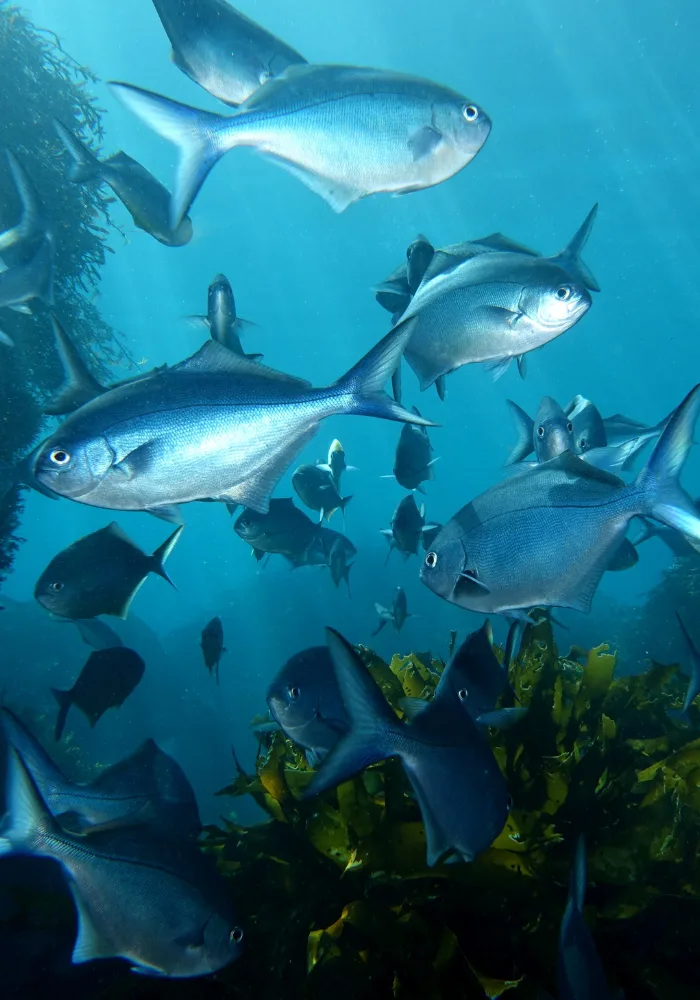
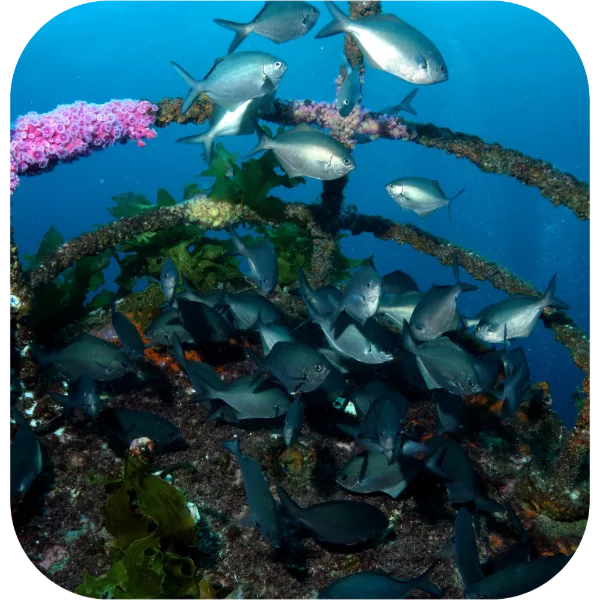
The reef diving in the Bay of Islands is completely different from anywhere were else in the world. We have a blended zone with tropical fish brought down to our temperate environment, so often we hear it called sub-tropical.
These wayward tropical fish are brought south by the East Auckland Current. This is a branch of the East Australian Current, or the EAC from Finding Nemo fame. We get Lord Howe Coral fish from Lord Howe Island, Kermadec Scalyfins from the Kermadec Islands, Gold ribbon Grouper, Toadstool Grouper, and Green Wrasse to name a few.
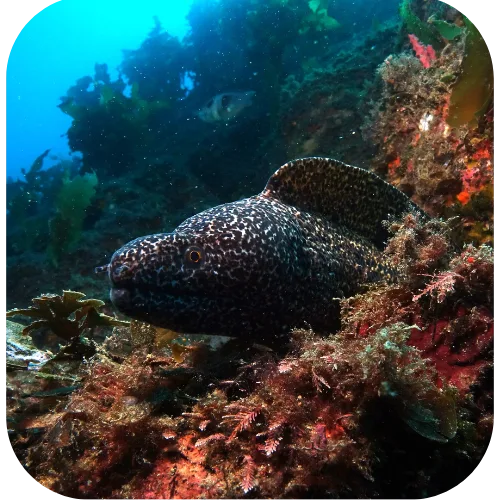
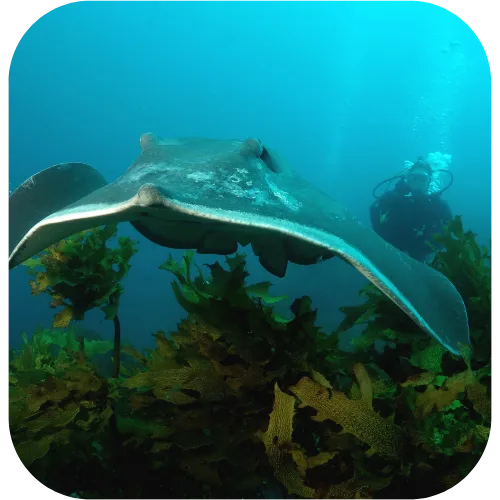
As well as all these tropical fish we see some amazing New Zealand residents. We have the largest Stingrays in the world, with our Short tail Rays getting up to 3m across and weighting over 300kg. We have 5 different types of Moray’s, with my favourite being the Mosaic. Our Scorpionfish get massive compared to the tropical ones. Northern Scorpionfish can get up 60cm in length but don’t have the deadly sting of there tropical relatives.
Water temperature in the bay of Islands ranges from 15c in late winter and early spring up to 22c in late summer and autumn. We dive in 1 or 2 piece 7mm wetsuits and use hoods, boots and gloves in winter. In summer you can get away with a 3mm steamer if a little thick skinned!
Visibility is consistently around 15 to 20 metres, but can get up to 40m in late summer when the blue water is in. This is when we have had east winds for a while and it pushes open ocean water onto the coast. When this happens we can see Sea Turtles, Manta Ray and the game boats of shore often see Whale Sharks.
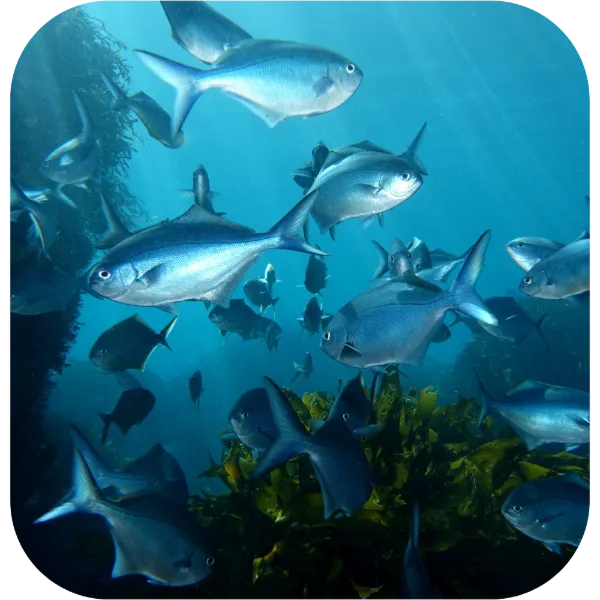
The terrain that we dive is volcanic in origin. We have great wall dives, caves and caverns, swim throughs and crevasses. Attached to the rocks and boulders is a forest of Kelp. Our Kelp grows to about 1.5m high, so not to the scale of Californian forests, but still very different to tropical coral reefs.
See all our Bay of Islands and Cavalli Islands dive sites: depths, levels and what you’ll see at each.
Who can dive it
Any certified diver. The reef dives are generally 18 metres or shallower, so an Open Water certification is all you need, and we take bookings from individuals.
If you haven’t dived in a while, our Refresher day is a good way back in.
Diving the Bay of Islands since 1978. Rated 4.9 on TripAdvisor (565 reviews) and 5.0 on Google (390).
Your Dive Day
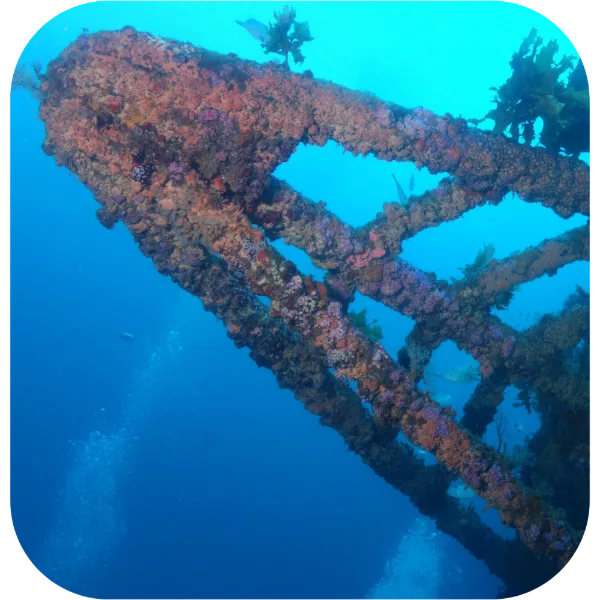
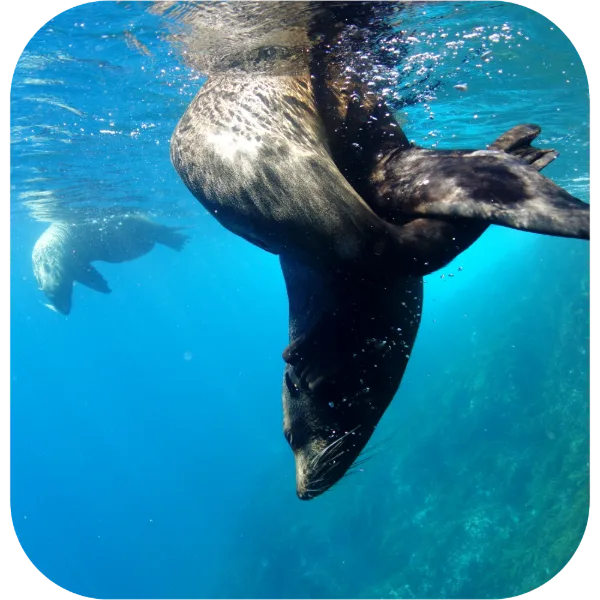
We start the dive day at 7:45am at our dive shop on Williams rd. We organize equipment and paper work, then load the boat on Paihia wharf for a 8:30am departure. On the way out to the dive site we cruise through the islands and often see Dolphins, Penguins, Seals and marine bird life. It takes approximately 30 minutes on Sentinel to get to Deep Water Cove. First up is normally the wreck dive, While they are diving we set up gear and brief up for the first reef dive. We then cruise to a reef area for a dive and some lunch/snorkelling.
After lunch we then head to another of the many great reef dive sites in the Bay of Islands. This is normally a dive exploring caves, arches, or swim throughs. Deep Water Cove is a marine reserve, so the marine life in this area is incredible.
Once all the diving is done we cruise back though the islands to Paihia, arriving at the wharf around 3:30pm. Arrival at Paihia can vary depending on how busy the boat is and if customers require to be back for a bus. If you are catching a bus in the afternoon, please let us know!
Common questions
Do I need to be a certified diver?
Yes for the reef trip — any recreational certification is enough, as the reef dives are generally 18 metres or shallower. If you have never dived before, our Intro Dive is $389 including all gear and needs no certification at all.
What is the visibility like?
It changes through the year. Autumn is usually the best of it — 15 to 30 metres and sometimes more. Winter sits around 15 metres and is reliable. Summer swings the most, anywhere from 8 metres to over 20. Spring is the least dependable, averaging 8 to 12 metres and occasionally dropping to 5.
How cold is it, and what wetsuit will I need?
Sea temperature runs from about 16°C in late winter up to about 22°C in February. Below 18°C we put you in a 7mm one-piece with a hooded vest, boots and gloves. Above 18°C it is the same 7mm suit, with the hood and gloves optional. In high summer at around 22°C a 5mm is plenty. Wetsuit hire is $20 on our charters, hood included.
Do I need my own gear?
No. A full scuba set is $100 on our charters. Individually: tanks and weights $40, regulator $20, BC $20, wetsuit $20 with the hood included. Mask, snorkel, fins and boots are no charge on our trips.
What time does the boat leave and when am I back?
Check in at the dive shop on Williams Road at 7:45am, then we load at Paihia wharf and leave at 8:30am. It is about 30 minutes on Sentinel out to Deep Water Cove. We are usually back alongside around 3:30pm. If you have an afternoon bus to catch, tell us.
Is there a toilet on board?
Yes. Sentinel has a toilet on board.
What happens if the weather turns?
We usually make the call the day before, off the lunchtime forecast. If a bigger system is on its way we generally know a few days out, and occasionally it changes overnight and we have to call it in the morning. If we cancel for weather, you get a full refund. Leave the decision to us rather than calling it off yourself — a day that looks rough on a forecast app is often fine on the water.
Can my partner come along if they do not dive?
Yes. A snorkeller or passenger place is $240 including all gear, or $190 for a child aged 6 to 14. They get the same day on the water, the same islands on the way out, and the lunch stop while the divers are down.

Diving Packages
Experience Scuba Diving in the Bay Of Islands.
important information
Before diving with Paihia Dive please have a look at our Understanding The Risks form, as this will need to be completed before joining any of our trips. If you are doing any dive training including Intro Dives or refreshers, please have a look at our Medical Form, if required you may need to get your doctor to sign you off as fit to dive, before completing the activity.