
How the Rainbow Warrior came to the Cavalli Islands
Most of our divers know roughly what happened to the Rainbow Warrior. Fewer know how she ended up here, in twenty-six metres of water off the Cavalli Islands, an hour up the coast from our shop. It is a better story than the headline version, and the part that gets left out is the part that happened on our doorstep.
A fisheries trawler from Aberdeen
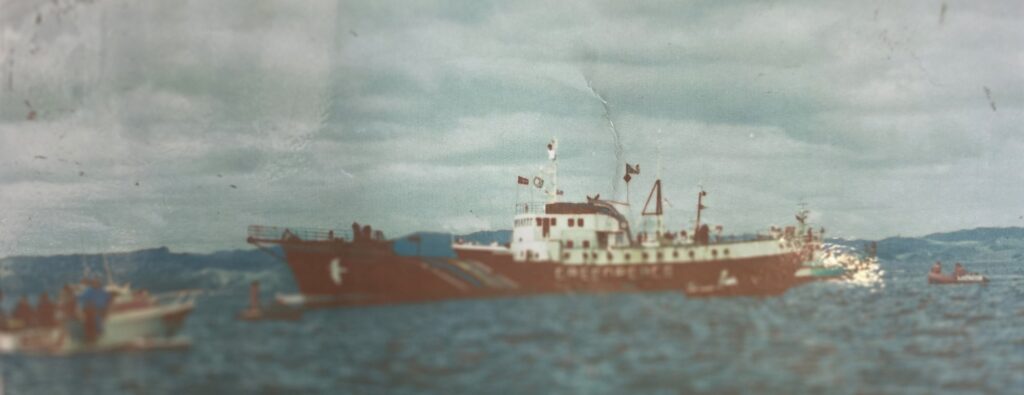
She was built in Aberdeen in 1955 by Hall, Russell & Company, and for her first twenty-two years she was not the Rainbow Warrior at all. She was the Sir William Hardy, a diesel-electric research trawler working for the British Ministry of Agriculture, Fisheries and Food.
Greenpeace UK bought her in 1977 for £37,000 and spent four months refitting her. She was relaunched on 2 May 1978 under a new name, taken from a book of North American prophecy called Warriors of the Rainbow, in which the peoples of the world come together to heal a damaged earth.
Seven years of getting in the way
For the next seven years she turned up where she was not wanted: in front of whaling fleets, on the ice at seal hunts, alongside ships dumping nuclear waste at sea, and in the Pacific where France was still testing nuclear weapons.
In May 1985 she did the piece of work her crew were proudest of. The people of Rongelap Atoll in the Marshall Islands had been living for thirty years on an island poisoned by fallout from the American hydrogen bomb test at Bikini in 1954, and they wanted out. Nobody else would move them. Over ten days the Rainbow Warrior shifted the entire community — around 300 people, with a hundred tonnes of belongings and building materials — a hundred and eighty kilometres to Mejatto in Kwajalein Atoll. They called it Operation Exodus. Then she turned south for New Zealand, to lead a protest flotilla to Moruroa.
Auckland, 10 July 1985
She never left. Just before midnight on 10 July, two explosive devices went off against her hull where she lay in Auckland. The first opened the engine room. Most of the twelve people aboard got off. Fernando Pereira, the Portuguese-born photographer on the crew, went back below for his cameras and drowned when the second charge went off and she flooded. He had turned thirty-five a couple of months before.
The bombers were agents of the French foreign intelligence service. Two of them, Alain Mafart and Dominique Prieur, were arrested in Auckland within days, travelling as a Swiss couple. In September the French Prime Minister, Laurent Fabius, admitted on the record what by then everyone knew: the agents had been acting on orders.
They were the only two who ever stood trial. Both pleaded guilty to manslaughter, and both were out within two years — Mafart sent home in 1987 on grounds of illness, Prieur in May 1988 because she was pregnant. Both were decorated and promoted. The United Nations mediated a settlement in July 1986: an apology from France and thirteen million dollars. The agent who is said to have placed the bomb was not named publicly until 2006, and then by his own brother.
It remains the only act of state-sponsored terrorism carried out on New Zealand soil, and it changed how this country thought about itself. It is also, four decades on, the reason people from all over the world come to dive a fishing boat off Matauri Bay.
What do you do with a ship you cannot repair?
She was refloated on 21 August 1985 and examined, and the damage was past fixing. That left a question nobody had faced before: what do you do with a ship that has become a symbol?
The answer came from two directions. The New Zealand Underwater Association suggested she be sunk somewhere she could become a living reef. And after negotiations with Ngāti Kura and Ngāti Rehia, she was offered a resting place in their waters off the Cavalli Islands. Dover Samuels was central to bringing her north.
That decision is why she is here rather than in a scrapyard or a museum, and it is worth saying plainly: she lies where she does because local people offered to look after her.
December 1987
Greenpeace would not use explosives on her. After everything that had happened, that mattered. Instead, openings were cut in her hull, small ones, enough to let the sea in and no more, and she was flooded slowly.
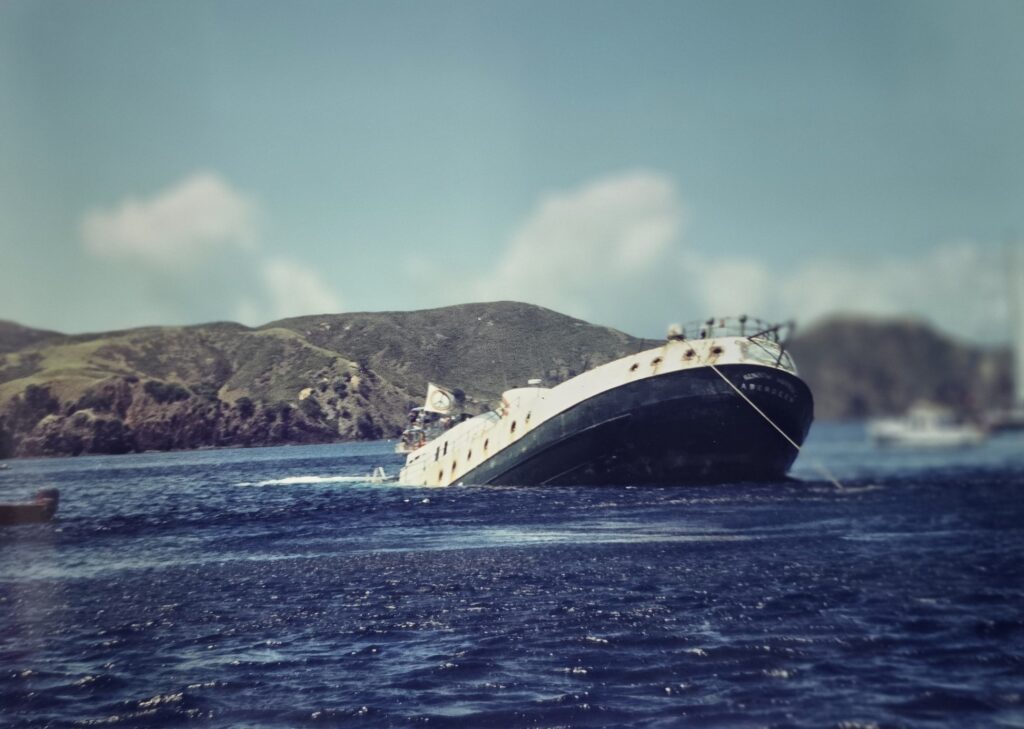
She was towed north out of Auckland on 2 December 1987, riding low, and on 12 December, off the Cavalli Islands, the water was let in. It took two and a half hours for her to go down.
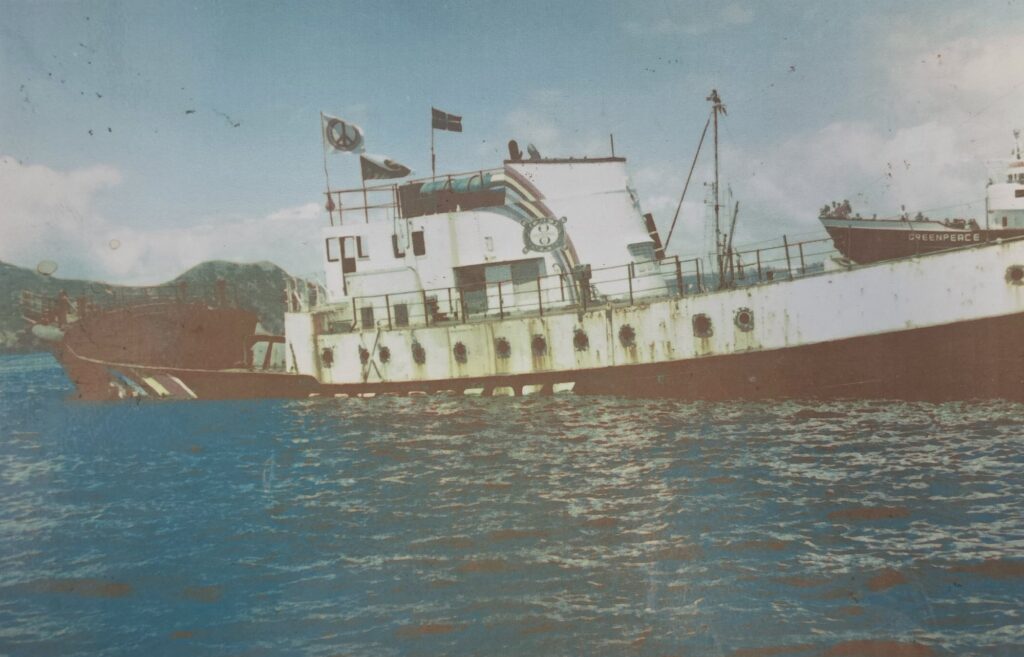
There were boats on the water and people on the headland. She was given a traditional Māori burial. Dover Samuels was in the water as she went down, and said that within half an hour there were triggerfish swimming around her.
She went down by the bow. The last of her above the water was her stern, and the lettering across it: RAINBOW WARRIOR, and beneath that ABERDEEN — the Scottish port she was built in, still her port of registry thirty-two years later. Then that went under too.
That is the part of the story we tell on the boat. She was not dumped. She was buried, with the people who had offered her a home standing on the hill above.
The memorial on the headland
Above the northern end of Matauri Bay there is a sculpture by Chris Booth, commissioned by Ngāti Kura, built from local stone and arched like a rainbow with the ship’s own propeller set into it. A black rainbow, for mourning. It was dedicated by the Governor-General, Sir Paul Reeves. If you are driving up to meet us at Matauri Bay, it is worth the ten minutes up the hill before you get on the boat — you can see the water she is lying in from up there.
Her masts are outside the Dargaville Museum.
What she is now
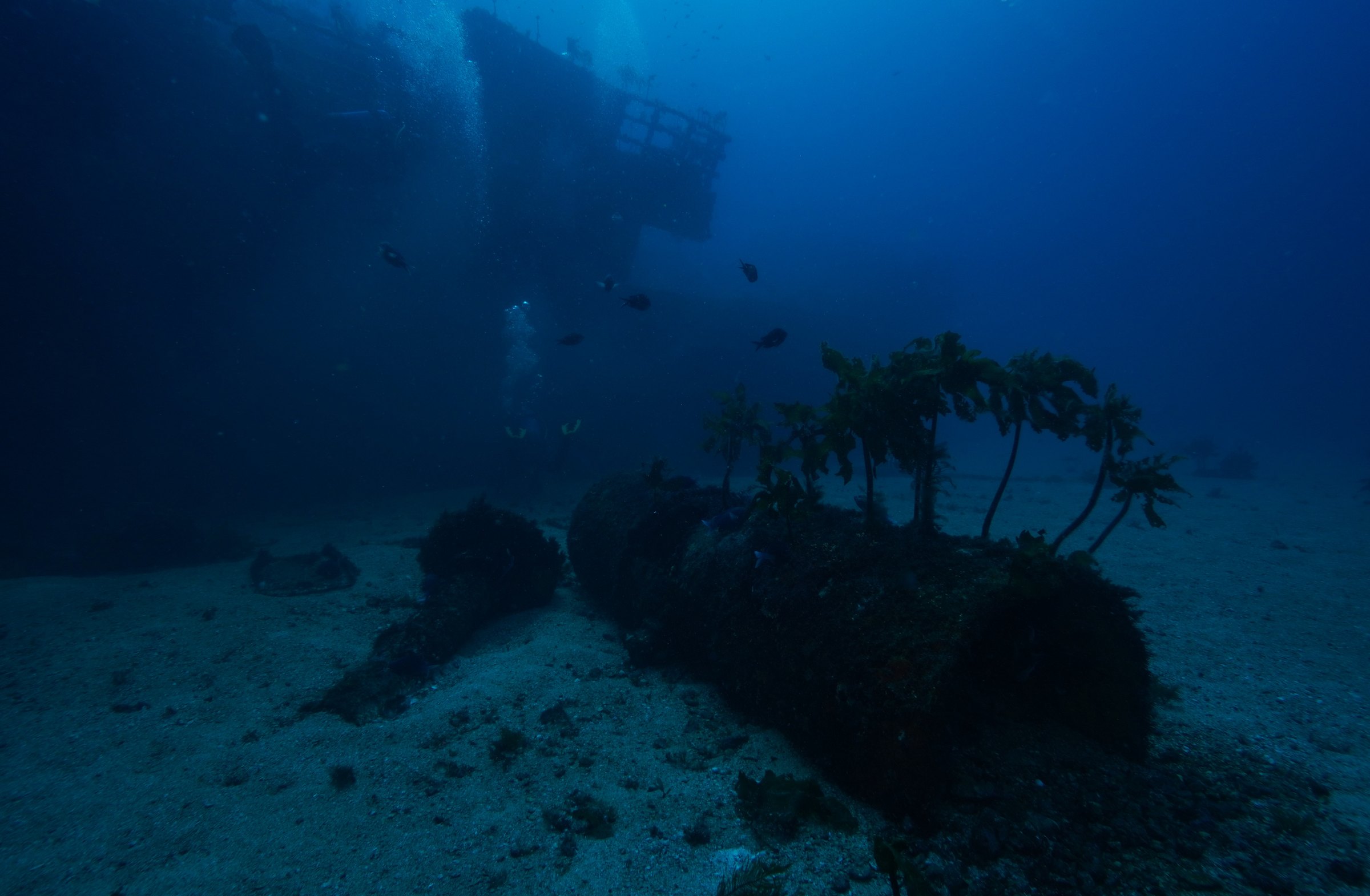
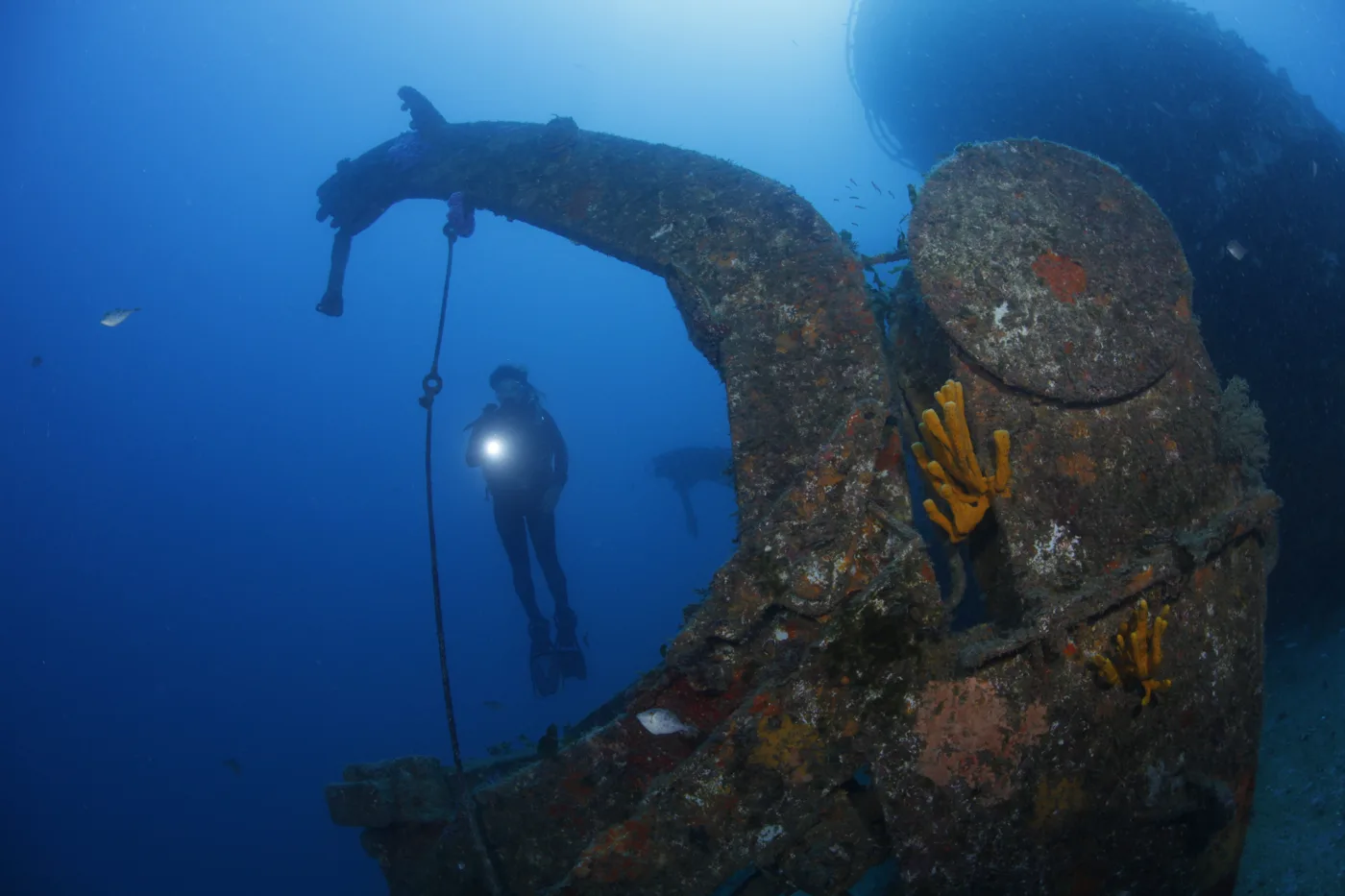
She is 40 metres long, lying with a slight list to starboard. With her masts removed she stands only 8 metres off the bottom — the top of the wreck is at 18 metres and the sand at 26, which means you can see most of her in one dive. She has been down here long enough that the steel has disappeared under what has grown on it — jewel anemones, bryozoans and ascidians over the whole structure, so that the first impression is colour rather than shipwreck. Get your eye in and there are nudibranchs, triplefins and blennies on every surface.
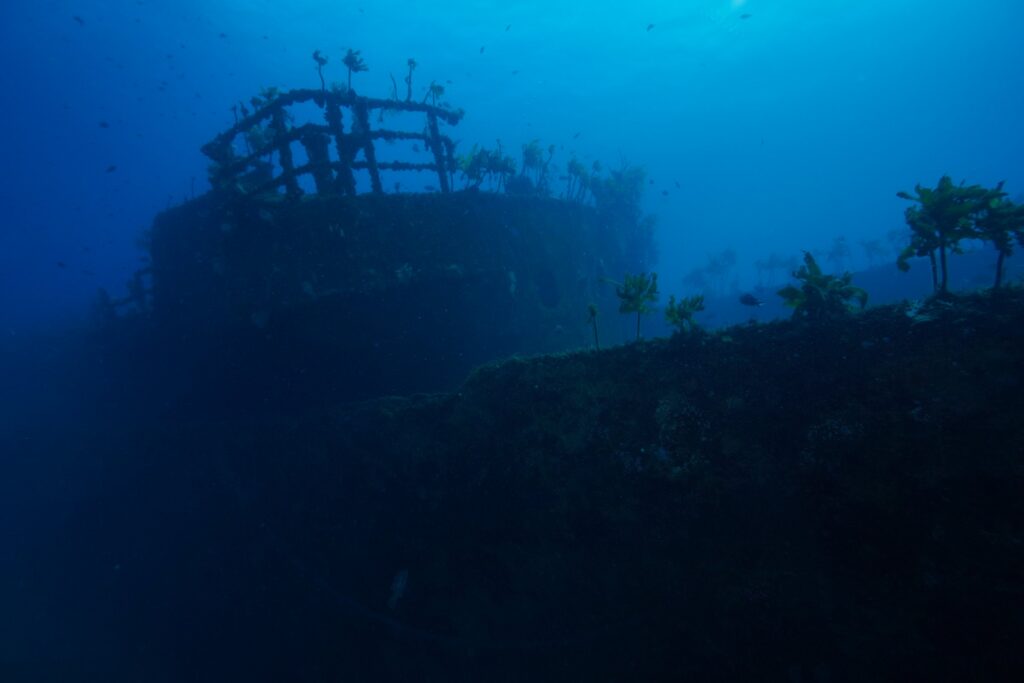
Bigeye hang in the dark spaces. There is a school of golden snapper that lives inside her and has for years. Outside, john dory, snapper and kingfish work the structure. In spring the demoiselles nest on her and get bold about it.
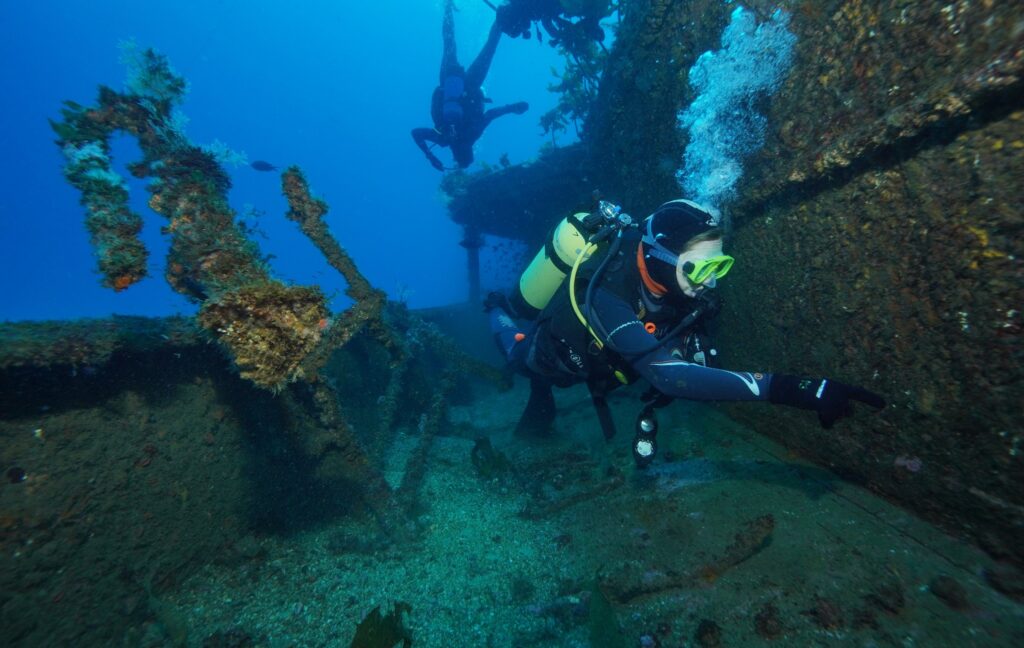
Lonely Planet put her in the world’s top ten dive sites in 2013, and she is still the dive people travel here for.
One thing we ask on every briefing. There is a room on her that we do not enter. That is where Fernando Pereira died. Divers always understand.
You do not need to be an Advanced diver. An Open Water diver dives her with one of our instructors as an SSI Deep Adventure Dive, $50 on top of the trip, and that dive counts towards the SSI Advanced Open Water course. We ask Open Water divers to have dived within the last year and Advanced divers within the last 18 months; if it has been longer, a refresher day sorts it out first.
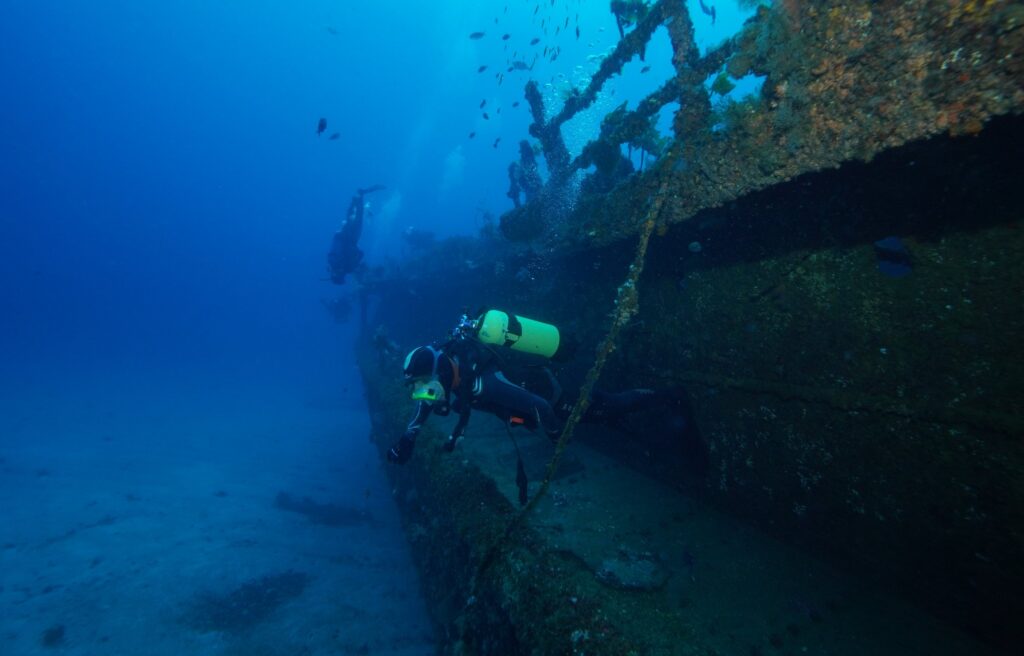
The day starts at the shop at 7:45 a.m. It is a 45-minute drive north with the boat on the trailer, a beach launch at Matauri Bay and an eight-minute run out to her. Lunch is on a Cavallis beach, then a reef dive on the way back, and we are usually in Paihia about 4:00 p.m.
The underwater photographs on this page are Craig’s own, taken on her over many years of diving her. He has written separately about what she is like to dive and photograph — that is the one to read if you want the diver’s view rather than the history.
Press the Book Now button to see dates and book online, or call the shop on 0800 107 551.
Recent Comments