

At a glance
| Question | Short answer |
|---|---|
| Best-known dive | The Poor Knights Islands marine reserve, off Tutukākā in Northland |
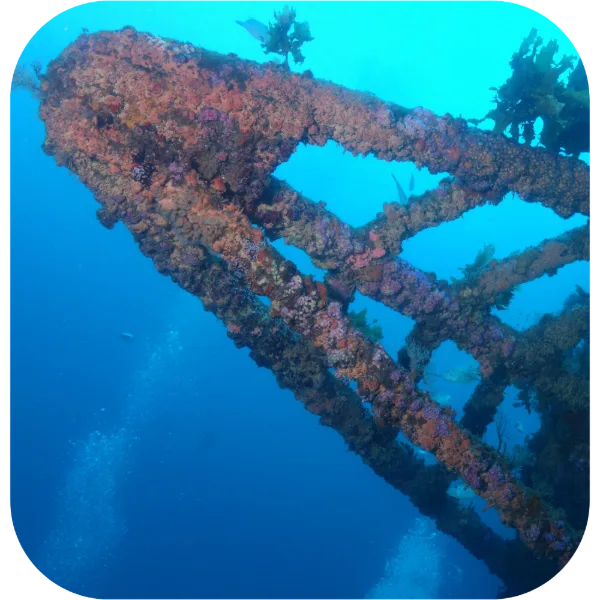
| Best-known wrecks | Rainbow Warrior (Cavalli Islands), HMNZS Canterbury (Bay of Islands), Mikhail Lermontov (Marlborough Sounds) |
| Warmest water | Northland: about 16°C in late winter to 22°C in late summer |
| Coldest water | South Island: about 8°C in the cooler months to 18°C in summer |
| Clearest water in the north | Autumn, March to May, usually 15–30 metres of visibility |
| What to wear | A 7 mm wetsuit with a hood for most of the year in the north; a drysuit for much of the year in the south |
| Certification | Open Water covers most reef dives. Our two wrecks are open to Open Water divers with an instructor |
South Island temperatures are from newzealand.com. The Northland figures are what we see on our own boats.
Where to dive, north to south
Most visiting divers start in Northland, where the water is warmest and three of the country’s best-known dives sit within a couple of hours of each other.
| Region | Known for | Good to know |
|---|---|---|
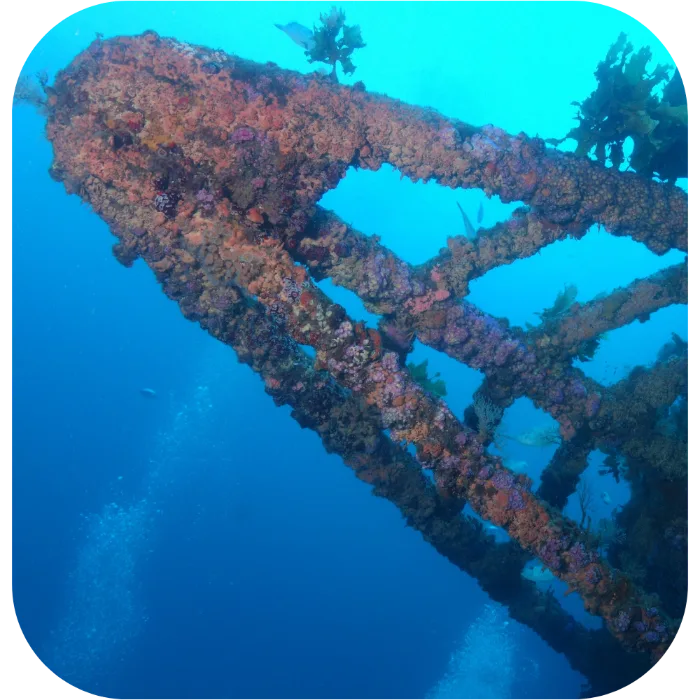
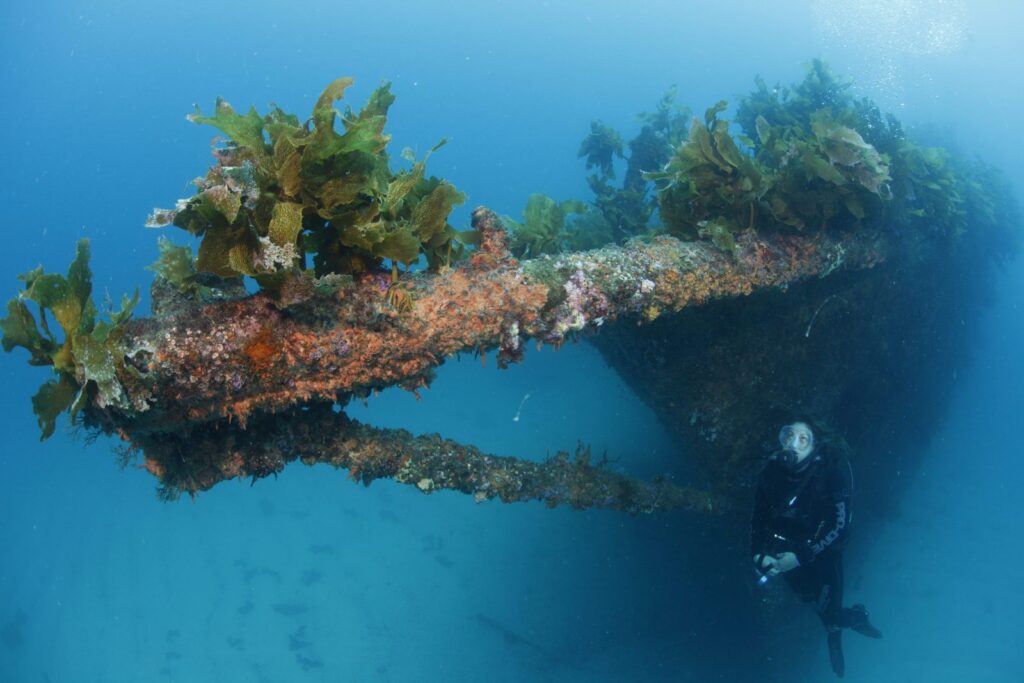
| Bay of Islands and Cavalli Islands, Northland | The Rainbow Warrior and HMNZS Canterbury wrecks, volcanic reefs, caves and swim-throughs | This is where we dive. See our dive sites and wreck guide |
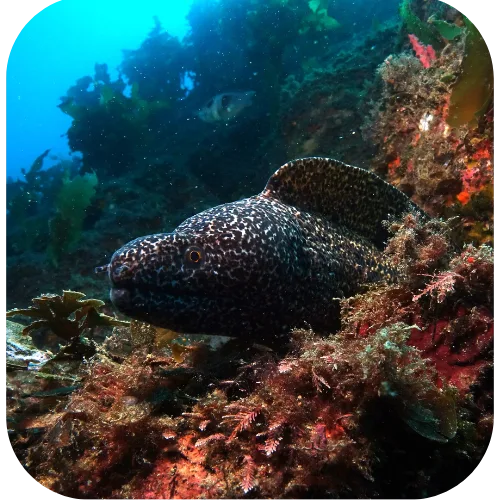
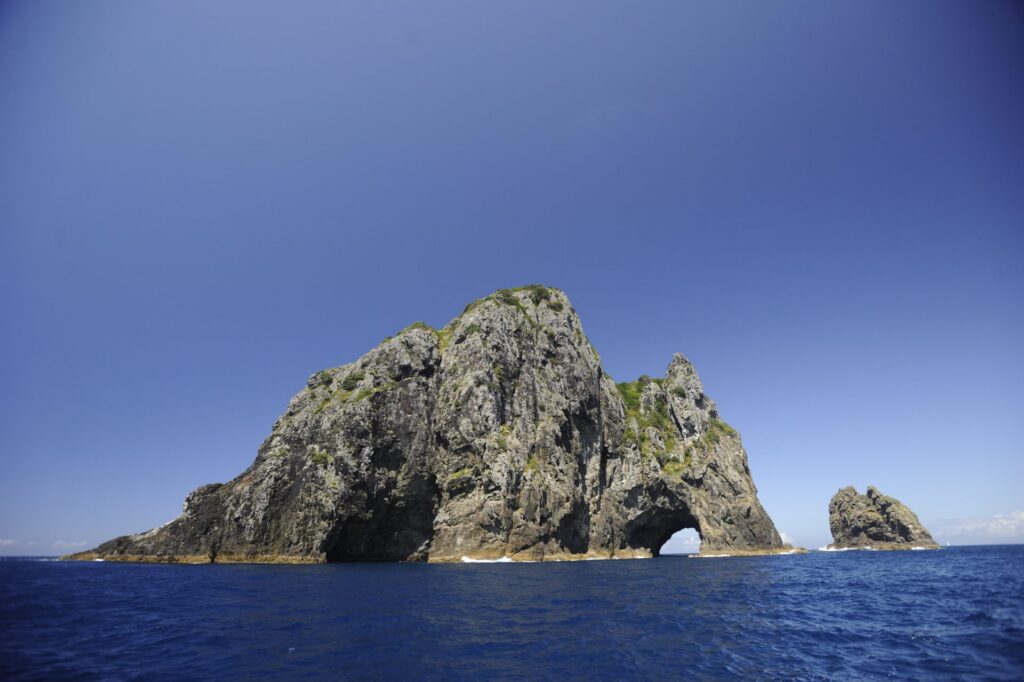
| Poor Knights Islands, Northland | A marine reserve off Tutukākā with arches, caves and subtropical fish | Often listed among the world’s best dive sites. Craig spent nine years diving and skippering dive boats here. Boats leave from Tutukākā |
| Tutukākā coast, Northland | Two navy wrecks, HMNZS Tui and HMNZS Waikato | Scuttled in 1999 and 2000, at about 32 metres and 28 metres |
| Goat Island, north of Auckland | New Zealand’s first marine reserve | You can dive or snorkel straight off the beach |
| Coromandel | Two marine reserves, popular for diving and snorkelling | On the east coast, across the Hauraki Gulf from Auckland |
| Bay of Plenty | The tug Taioma, off Motiti Island | Scuttled in 2000, at about 27 metres |
| Wellington | The frigate HMNZS Wellington, off Island Bay | Scuttled in 2005, at about 21 metres, and now in two sections |
| Marlborough Sounds | The Mikhail Lermontov, a 176-metre Soviet cruise liner that sank in 1986 | One of the largest diveable wrecks in the world, to about 38 metres. Go with a guide who knows her |
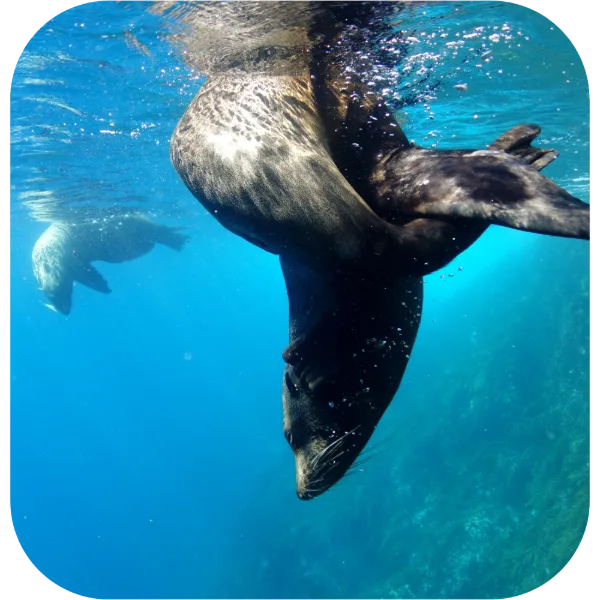
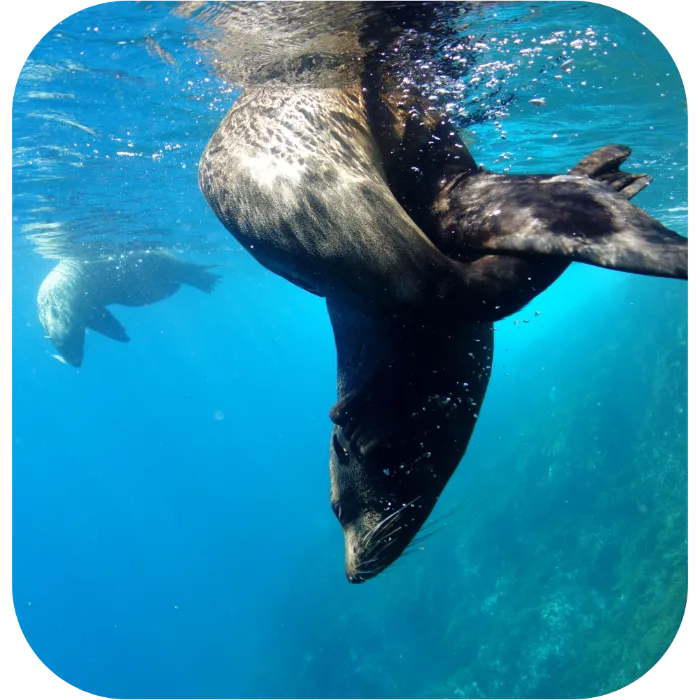
| Kaikōura | Diving with New Zealand fur seals | Cold water, diveable all year |
| Fiordland | Black coral in Milford Sound | Cold, dark water, and a drysuit for much of the year |
When to come
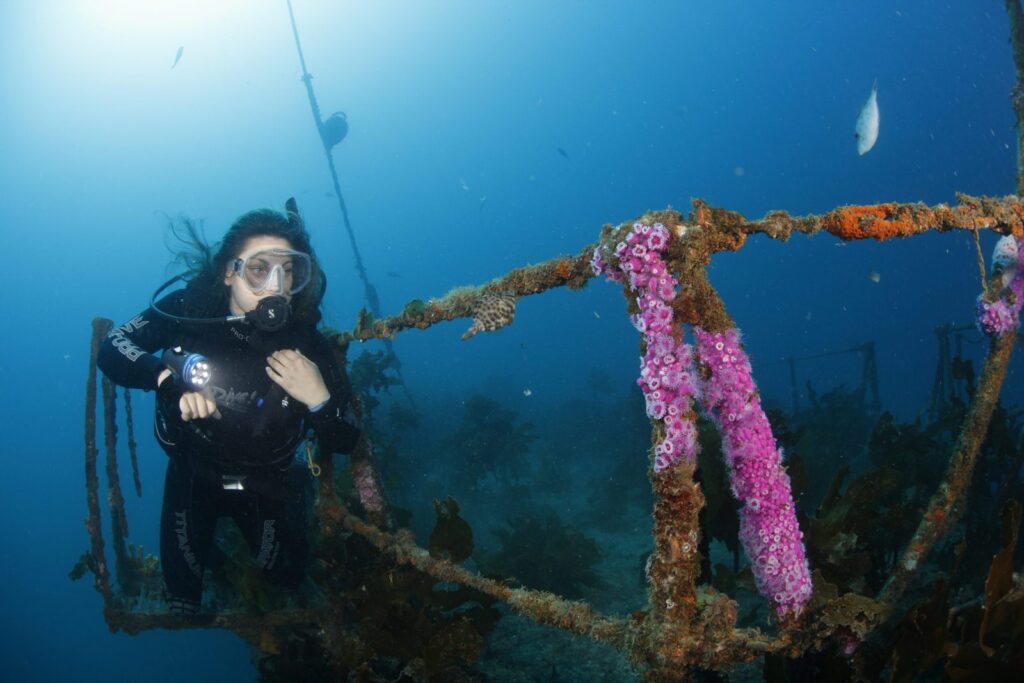
Autumn, from March to May, is the best time to dive the north of New Zealand: the water is still warm and visibility is at its best. Every season is diveable, and each has something going for it.
| Season in Northland | Water | Visibility | What it’s like |
|---|---|---|---|
| Summer, December to February | 20–22°C | 8 metres to more than 20 | Long, warm days and the busiest boats. Book ahead |
| Autumn, March to May | 19–22°C | 15–30 metres or more | The clearest water of the year |
| Winter, June to August | 16–18°C | Around 15 metres | Quiet boats, and hundreds of crayfish on the Canterbury |
| Spring, September to November | 16–18°C | 8–12 metres | The least reliable visibility |
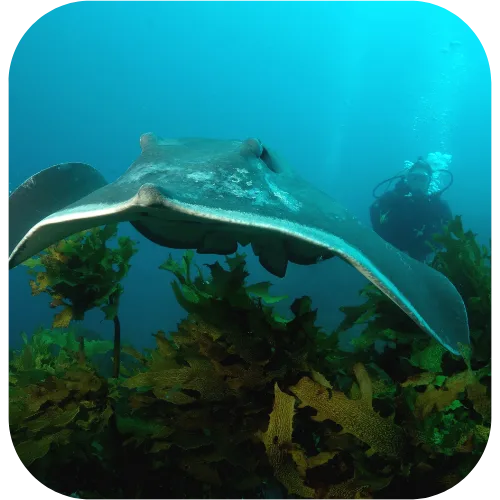
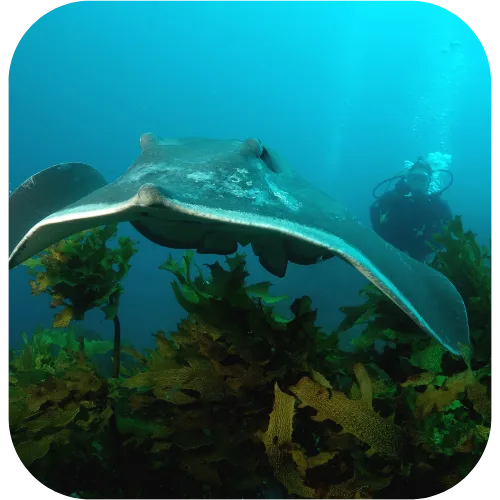
Summer brings stingrays onto the reefs, and once the water reaches 20°C we see the occasional manta ray. In late summer there’s a chance of seeing the odd shark or two.
Further south the water is colder all year. The South Island peaks at about 18°C between November and April and drops to about 8°C in the cooler months.
Weather matters more than season on any given day. Sheltered sites such as Deep Water Cove can often be dived when the open coast can’t, so it’s worth leaving a spare day in your plans.
What you need
An Open Water certification and a recent dive are enough for most New Zealand diving. Here is how it works on our boats.
- Certification. Open Water divers can join any of our reef dives. Both wrecks lie deeper than 18 metres, so Open Water divers dive them with one of our instructors as a Deep Adventure Dive ($50), which counts towards the SSI Advanced Open Water course. If you can show proof of dives to 30 metres, you can join the group without it.
- Recent diving. For the wrecks, Open Water divers need to have dived within the last 12 months, and Advanced divers within the last 18 months. If it has been longer, a Refresher on a reef the day before sorts that out.
- Not certified yet. An Intro Dive needs no experience, and the SSI Open Water course takes three days.
- Wetsuits. Below 18°C we dive in a 7 mm one-piece with a hooded vest, boots and gloves. In midsummer a 5 mm is fine. You don’t need to bring one, as full gear hire is $100 a day on our trips.
- Travelling alone. You don’t need a group or a buddy. We’re happy to take individual bookings.
- Flying. Leave a gap between your last dive and your flight. Most training agencies advise at least 18 hours after a day of two or more dives.
Current prices are on our rates page.
Fitting Northland into your trip
Three days in Northland covers both of our wrecks and the Poor Knights, and it fits easily on the front or back of a North Island holiday. Paihia is about three hours’ drive north of Auckland.
Day one: HMNZS Canterbury and a reef. Meet at our shop at 7:45 a.m. and leave Paihia wharf at 8:30 a.m. Deep Water Cove is about 30 minutes away by boat, and we’re back at about 3:30 p.m.
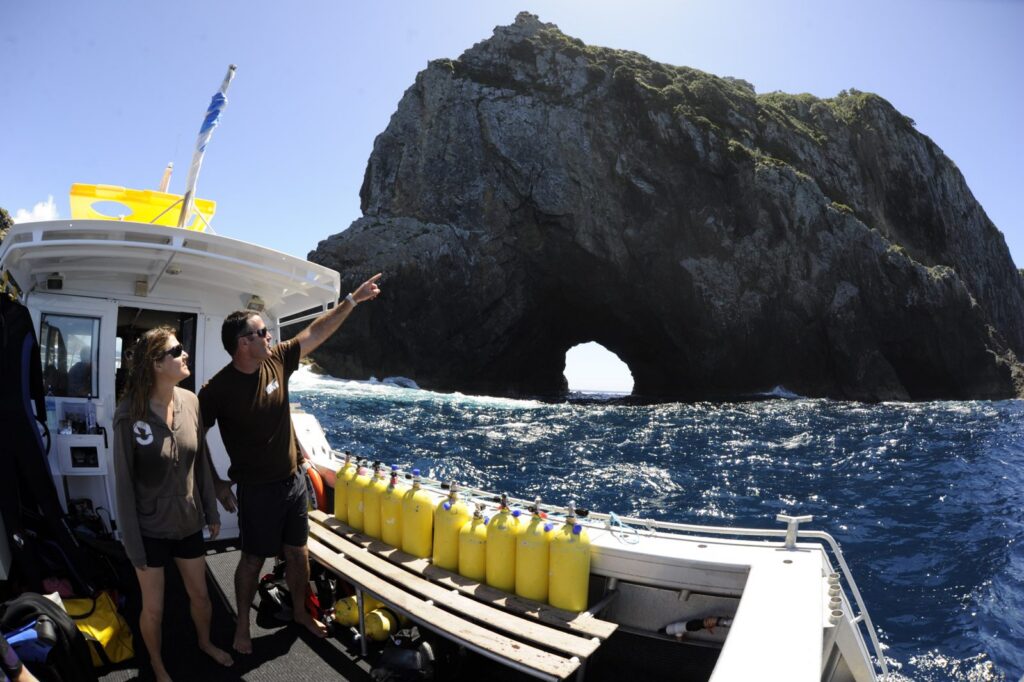
Day two: the Rainbow Warrior and a Cavalli Islands reef. Meet at the shop at 7:45 a.m. for the 45-minute drive to Matauri Bay, or meet us there. We’re back in Paihia at about 4:00 p.m.
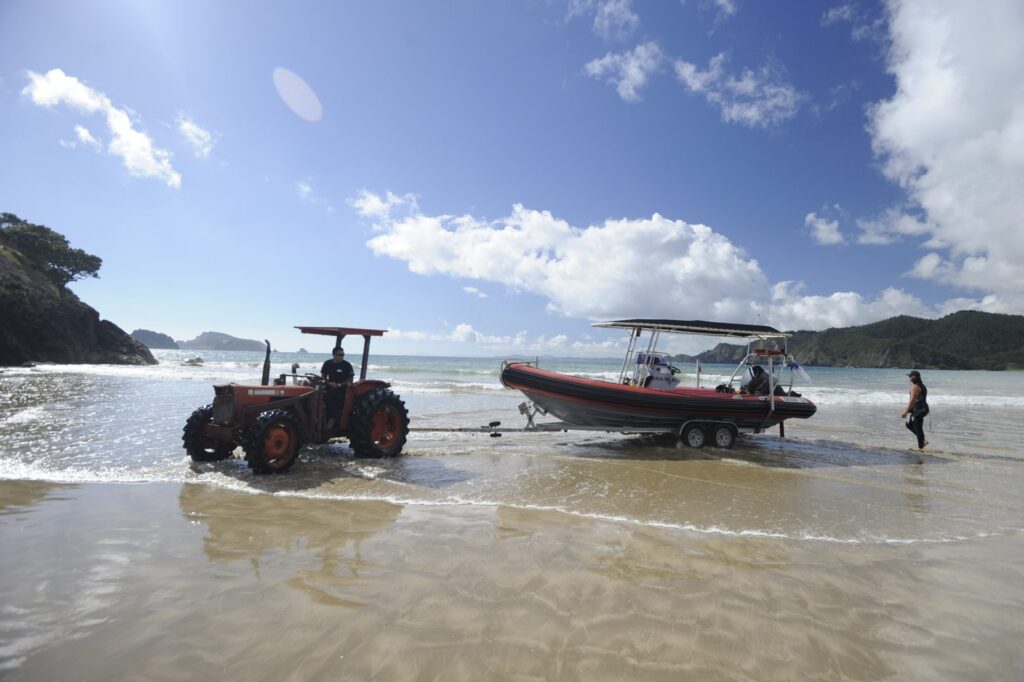
Day three: the Poor Knights, or more of the Bay. Tutukākā is about an hour and a half south of Paihia, on the way back towards Auckland. Or stay and dive the reefs and caves around Cape Brett.
We make the weather call the day before, and the Cavalli Islands need calmer conditions than Deep Water Cove. If your dates are flexible, let us know when you book.
Non-divers can come out on the same boats to snorkel, so the trip works for mixed groups too.
Common questions
Is New Zealand good for scuba diving?
Yes. The north has subtropical reefs, sea caves and several large wrecks, and the south has cold, clear water with seals and black coral. Most of it is reached on day trips from small coastal towns.
When is the best time to dive in New Zealand?
Autumn, from March to May, in the north: the water is 19–22°C and visibility is usually 15–30 metres. You can dive all year.
How cold is the water in New Zealand?
In Northland it runs from about 16°C in late winter to 22°C in late summer. The South Island ranges from about 8°C to 18°C.
Do I need to be an Advanced diver to dive the wrecks?
No. Open Water divers dive the Rainbow Warrior and the HMNZS Canterbury with one of our instructors as an SSI Deep Adventure Dive, which counts towards the Advanced Open Water course.
Can I learn to dive in New Zealand?
Yes. Our SSI Open Water course takes three days, with pool sessions, two shore dives at Matauri Bay and two boat dives at Deep Water Cove.
Can I dive if I’m travelling on my own?
Yes. We take individual bookings, and each trip runs once enough people have booked.