
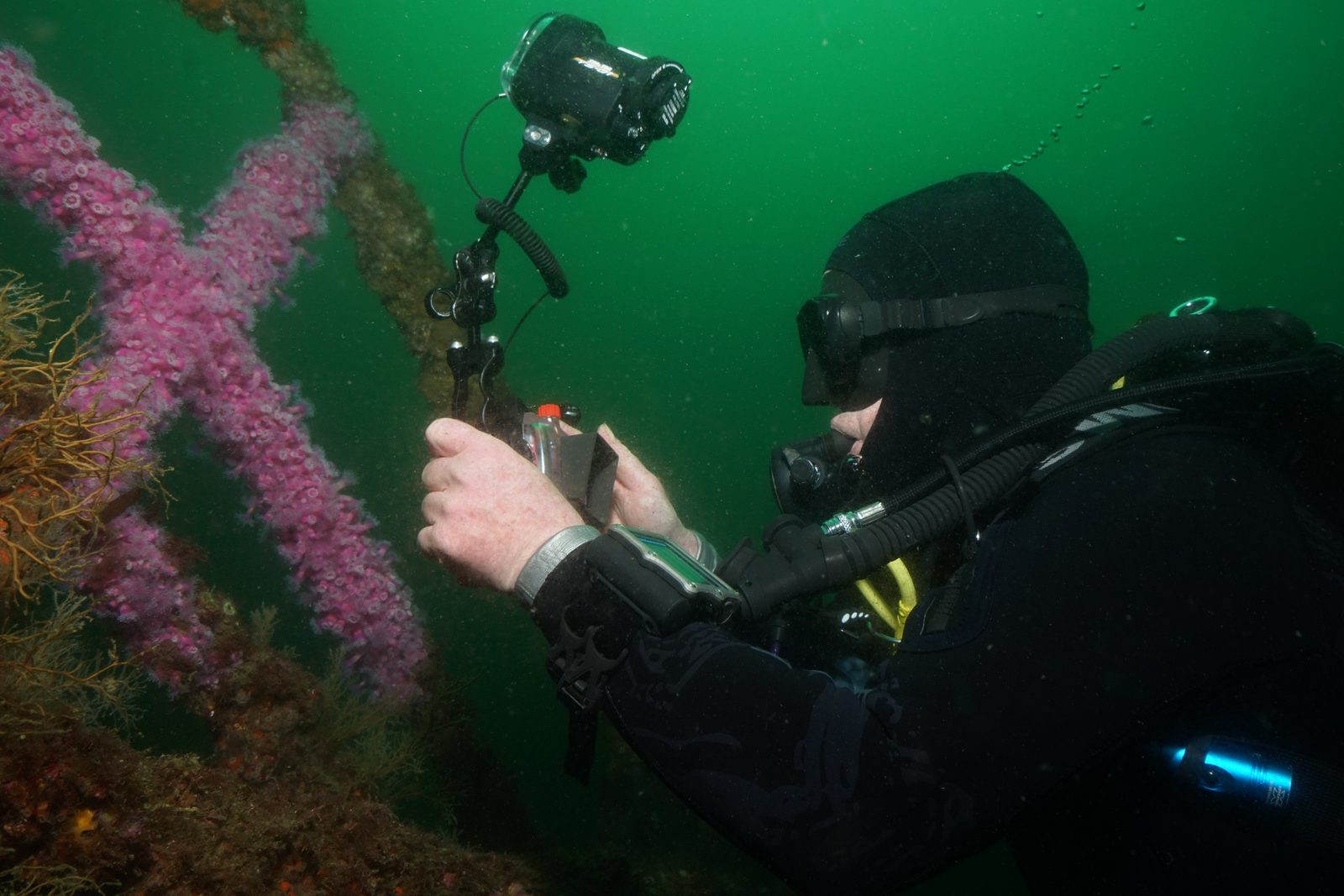
Spring is the season we get asked about least, and it is the one that catches people out in both directions.
The water is coming off its winter low. Through September, October and November it sits around 16 to 18 degrees, climbing slowly, and it lags well behind the air. A warm, still day on the beach does not mean warm water underneath it. You’ll be in a 7mm one-piece with a hooded vest, boots and gloves, and you’ll be glad of all of it. By the time we’re into the 22-degree water of high summer a 5mm is plenty, but that is a couple of months away yet.
Visibility: the honest version
Spring is our least reliable time of year for visibility. Averages sit around 8 to 12 metres and it can drop to 5. Plankton blooms as the water warms and the light returns, and that bloom is the engine for everything else that happens out there, but it does put particles in the water.
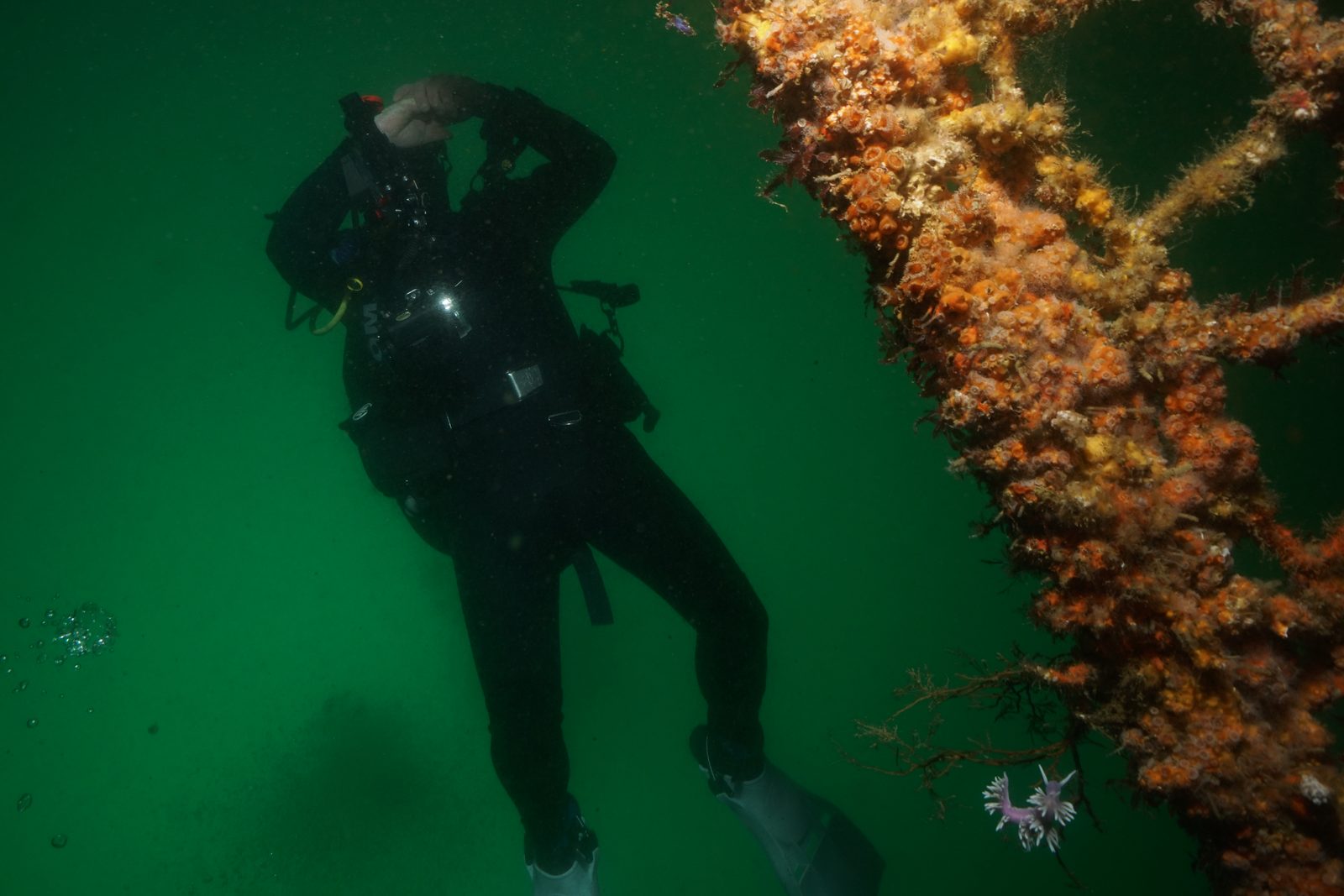
It is not the whole story though. Spring can also hand you a day that looks like autumn, and there is no way of knowing until you’re in. If you want the year’s best visibility, come in autumn, when 15 to 30 metres is normal. If you want to dive in spring, come with the right expectations and you’ll usually do better than you feared.
What we do when the water is green
We choose differently. The wrecks come into their own. The Canterbury and the Rainbow Warrior are big, vertical, structured things, and you are looking at what’s in front of you rather than across open reef. Eight metres of visibility on a wreck is a very different experience from eight metres over sand.
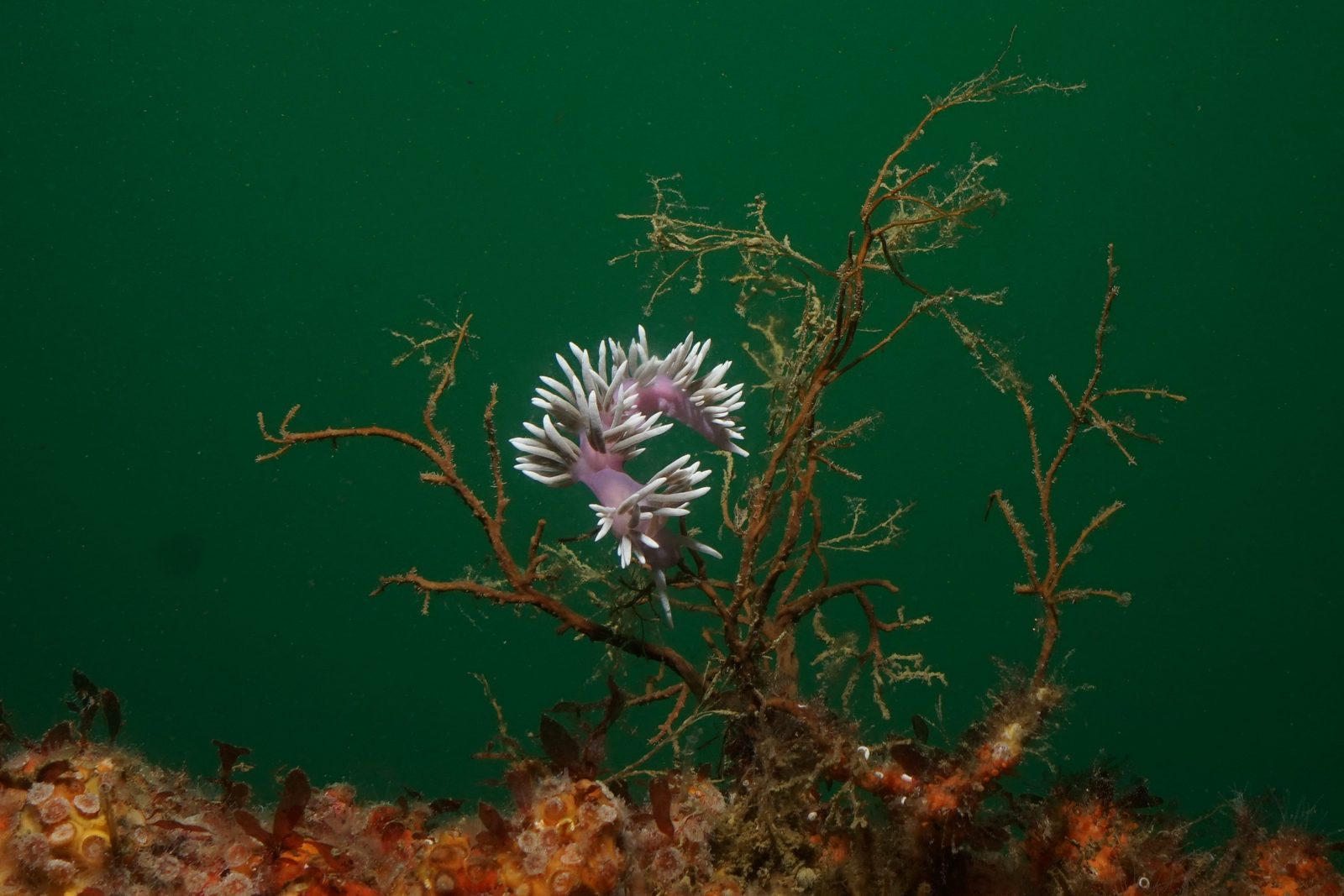
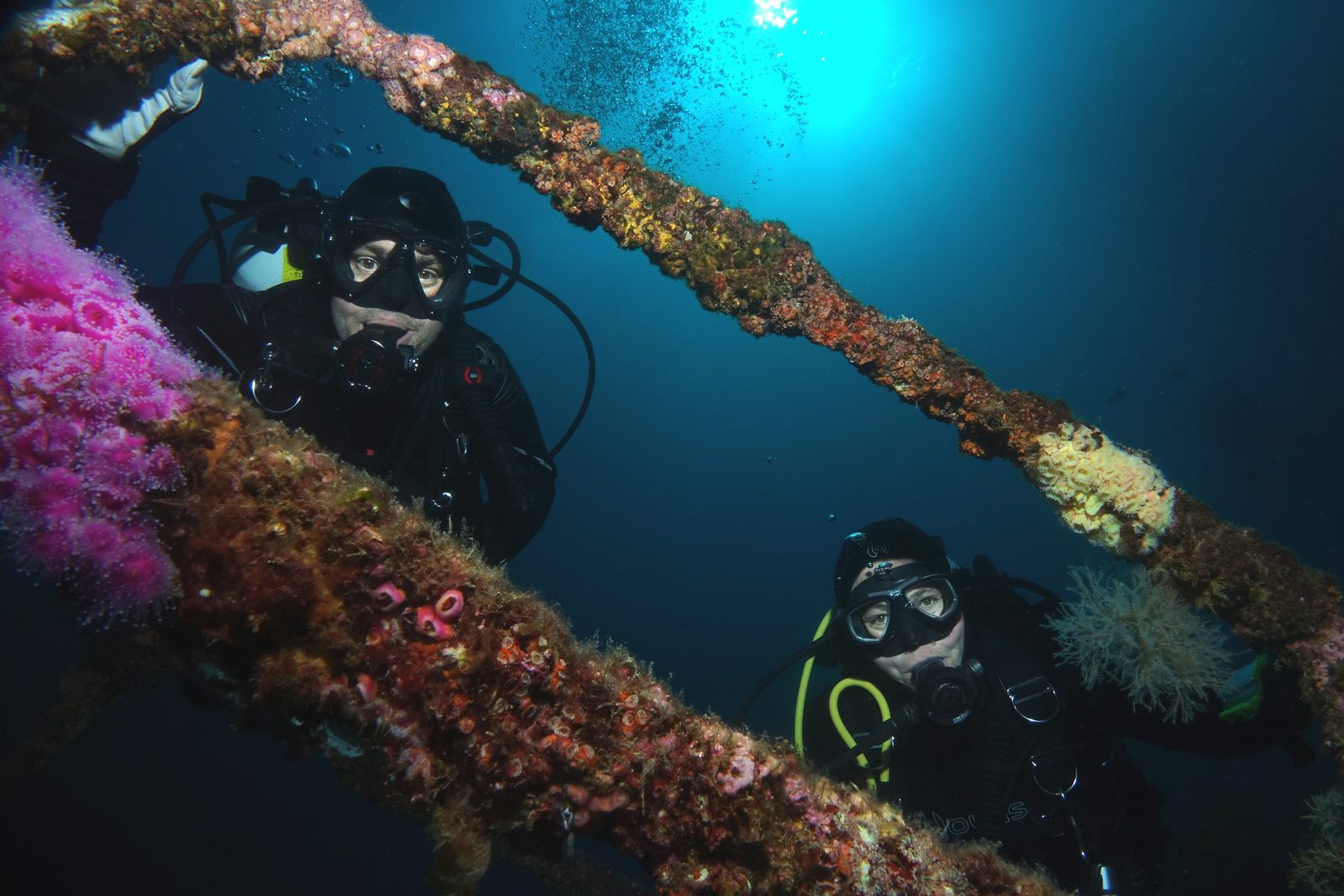
It is also a good season to slow down and look closely. Nudibranchs, triplefins, blennies, the encrusting life on the Rainbow Warrior that people describe as a kaleidoscope: none of that needs twenty metres of visibility. Some of the best photographs come off days when there was nothing to see in the distance.
What’s happening underwater
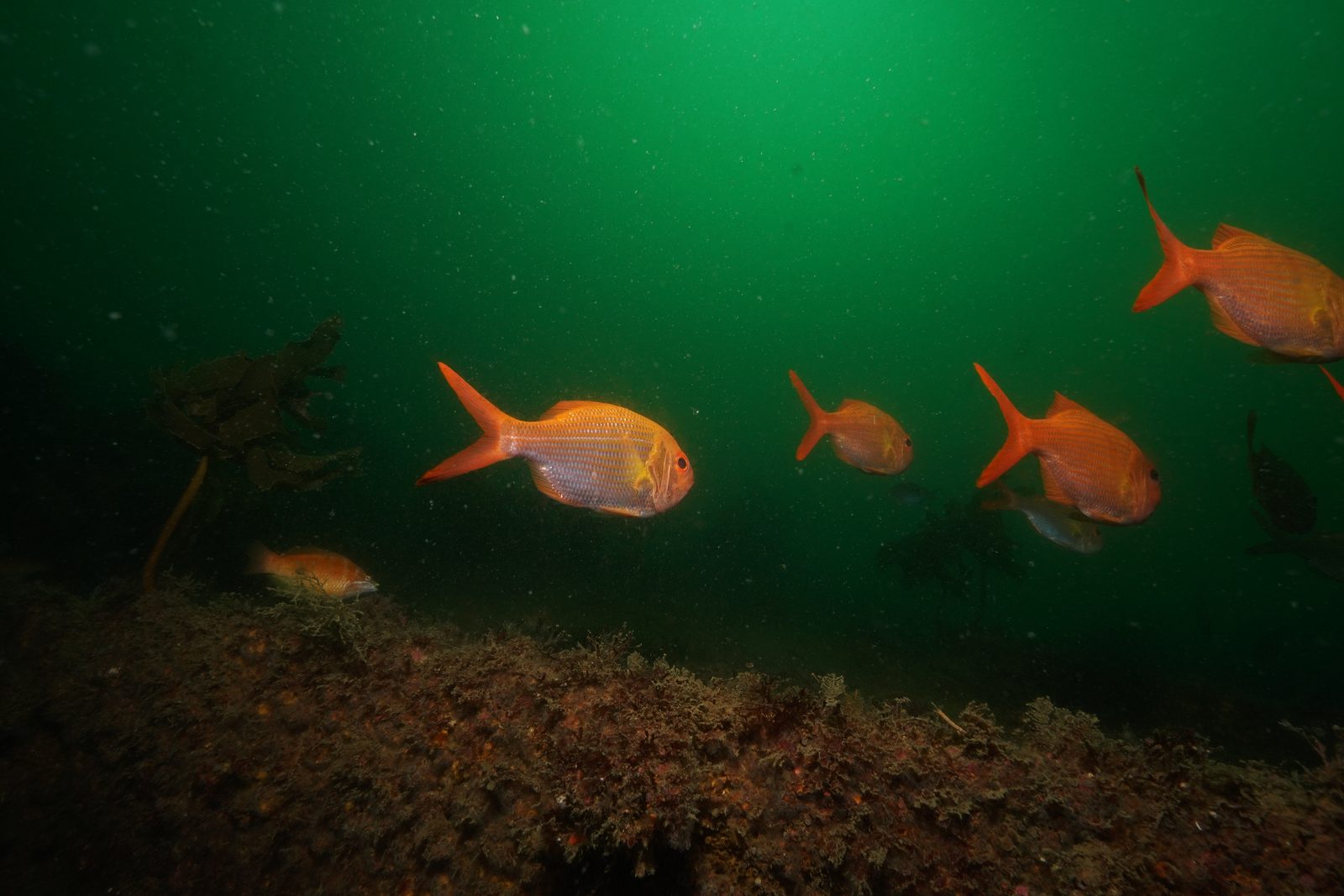
Spring is nesting season for the demoiselles on the Rainbow Warrior, which makes them bolder and more interesting to watch than usual. The resident school of golden snapper is still inside her, and the bigeyes are still in the dark spaces where they always are.
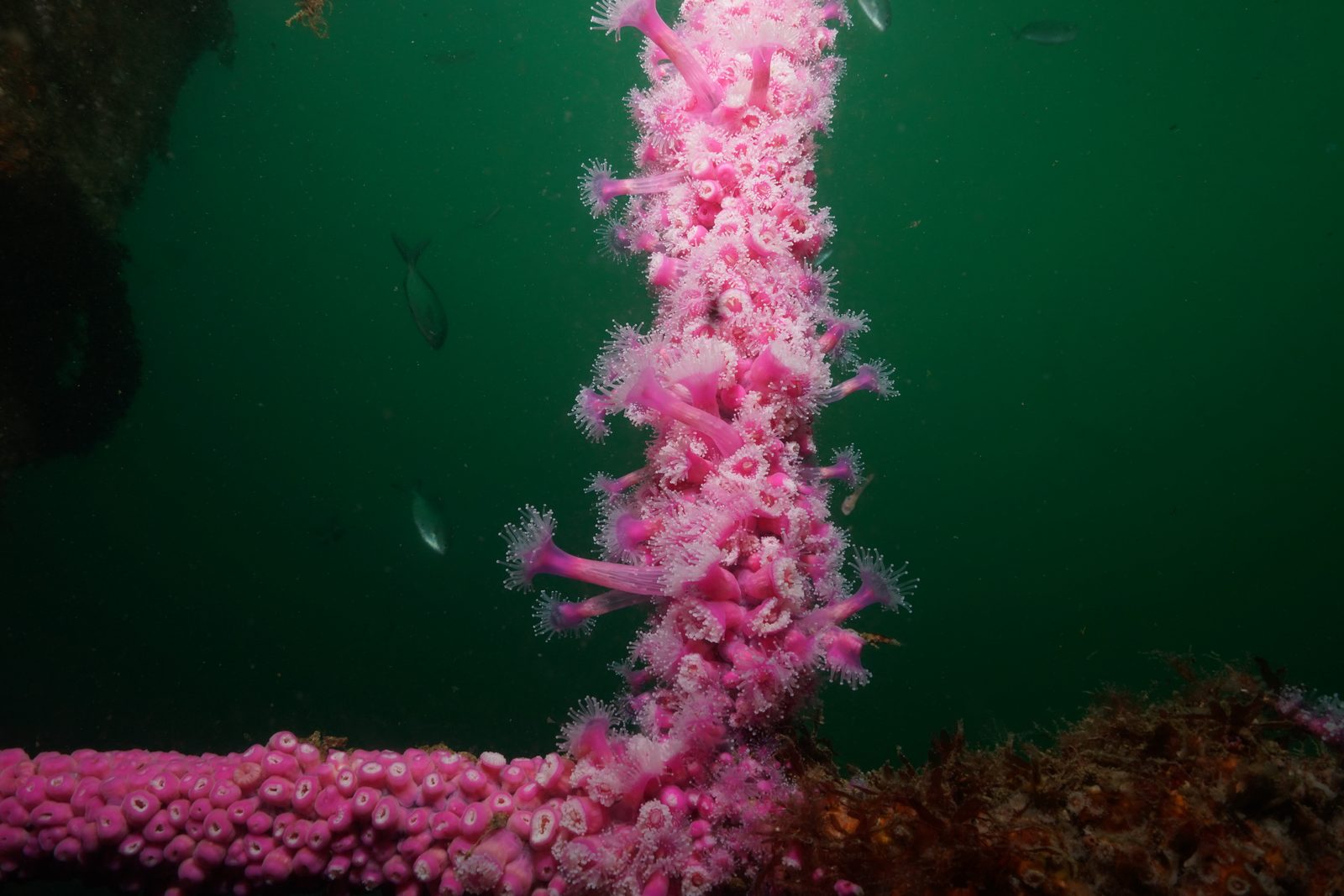
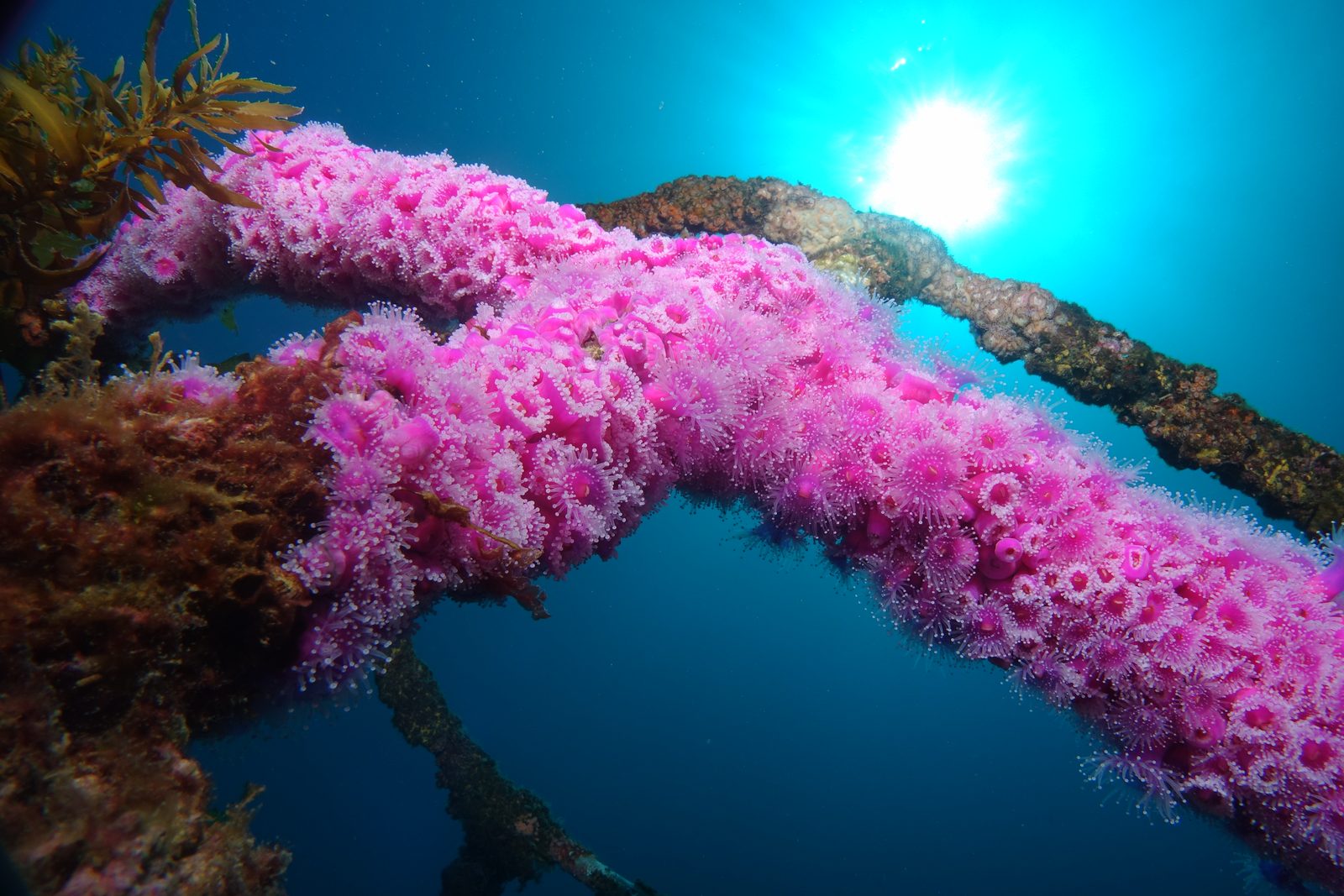
On the Canterbury the winter crayfish are thinning out as the season turns, and the jewel anemones are finished spawning but still covering the mast and the railings.
Coming out
Bring more thermal protection than you think you need, and something warm and dry for the boat. The wind still has an edge to it in spring and most people are colder on the ride home than they were in the water.
If you haven’t dived for a while, spring is a sensible time to get it out of the way. The season ahead is a better one to be current for than to be catching up in. Our refresher runs on the same boat as the reef trip, so you get the skills sorted and still get a dive out of the day.
Both wrecks are open to Open Water divers, diving with one of our instructors, and the dive counts towards your SSI Advanced Open Water course. You don’t need to bring a group.
See our trips for dates and online booking, or call the shop on 0800 107 551.
Recent Comments