
The Story Behind the Wreck
The HMNZS Canterbury spent 34 years in the Royal New Zealand Navy before she ever touched Northland waters as a wreck. Built in Scotland and commissioned in 1971, she was the last of the Navy’s Leander-class frigates, and the last steam-driven warship the RNZN ever ran. Over her career she patrolled the Persian Gulf, escorted a Royal Navy carrier to the Queen’s Silver Jubilee, and even sailed to Moruroa Atoll in 1973 to protest French nuclear testing, the same fight the Rainbow Warrior would later be sunk over.
By 2005, corrosion had done what nothing else could, and she was decommissioned. Rather than scrap her, she was scuttled as a purpose-built dive wreck, and care of the site later passed to local iwi. On 3 November 2007, after nine months of planning, she was sunk in Deep Water Cove, near Cape Brett, with more than 300 boats out on the water to watch her go down. Engineers had pre-flooded her lower compartments and cut extra holes in the hull so she’d settle upright on the sandy bottom, exactly as planned.
The Descent
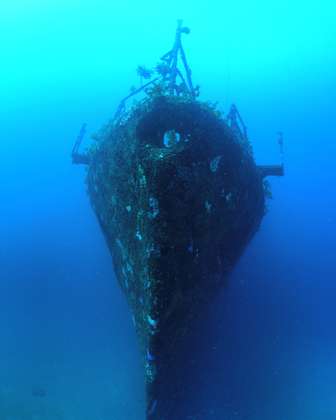
She’s 113 metres long and she sits dead upright on the seabed, which is the first thing that gets people. You come down the line expecting a jumble of wreckage, and instead this whole warship just appears out of the blue, funnel and bridge and all, looking more like she’s still on duty than sitting on the bottom.
Deep Water Cove was picked on purpose. It’s sheltered, the bottom is flat sand, and there’s barely any current, which is exactly why the Canterbury still sits in one piece today. Her sister ships, the Wellington and the Waikato, weren’t so lucky when they were scuttled elsewhere and broke up. Here, you get the whole ship, still intact, still recognisably a warship.
Depth-wise there’s something for everyone. The top of the wreck is at about 14 metres, and her decks run from 22 to 28, which is where you’ll find the bridge and the helicopter hangar. If you want to go further, the seabed drops away to 36 metres at the stern, but that’s advanced diver territory. For most of my divers, the upper deck and bridge are the sweet spot, and there are swim-throughs from the bridge into the helicopter hangar that never fail to get a reaction.
Life Aboard the Wreck: The Jewel Anemones
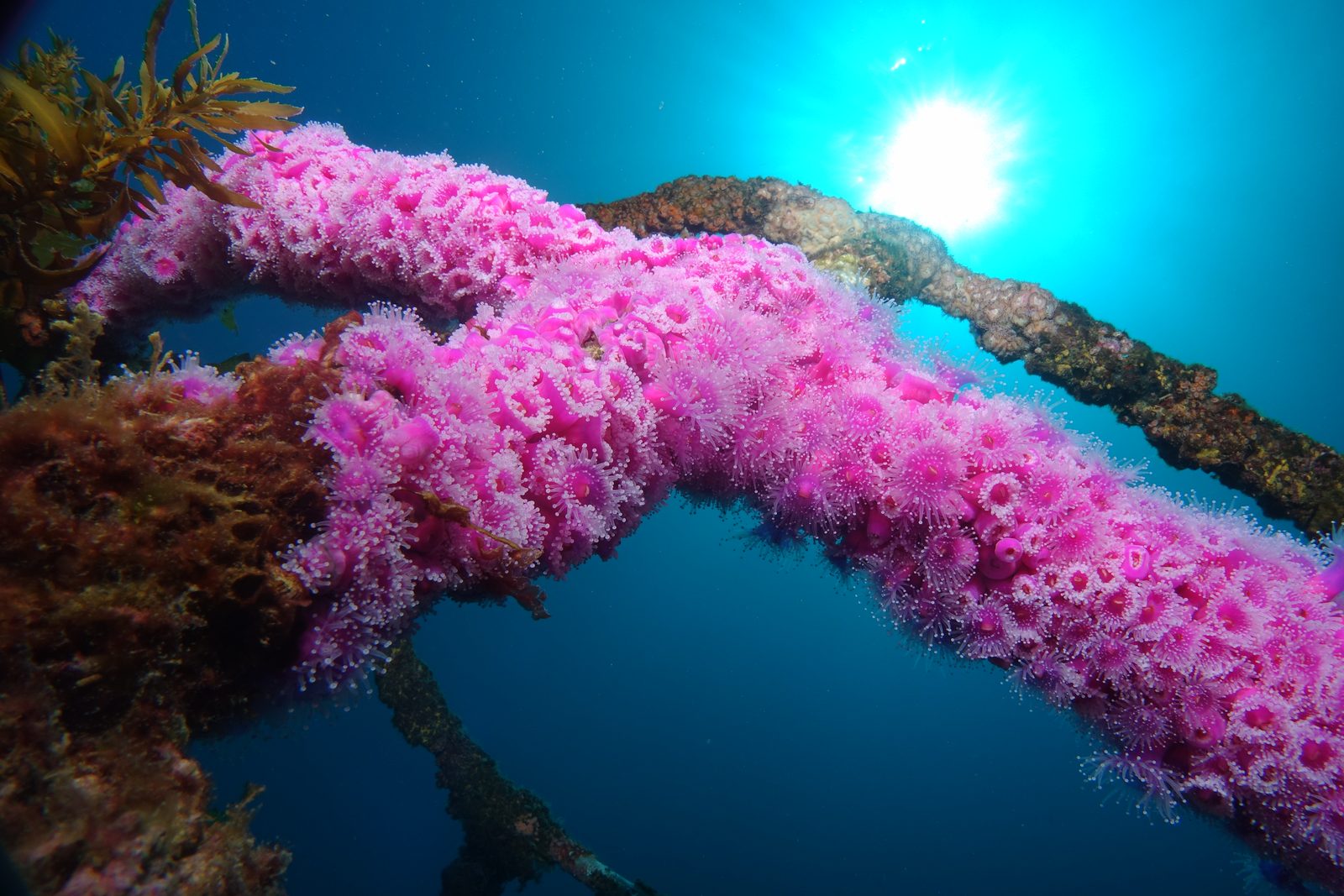
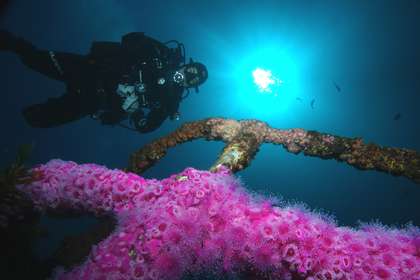
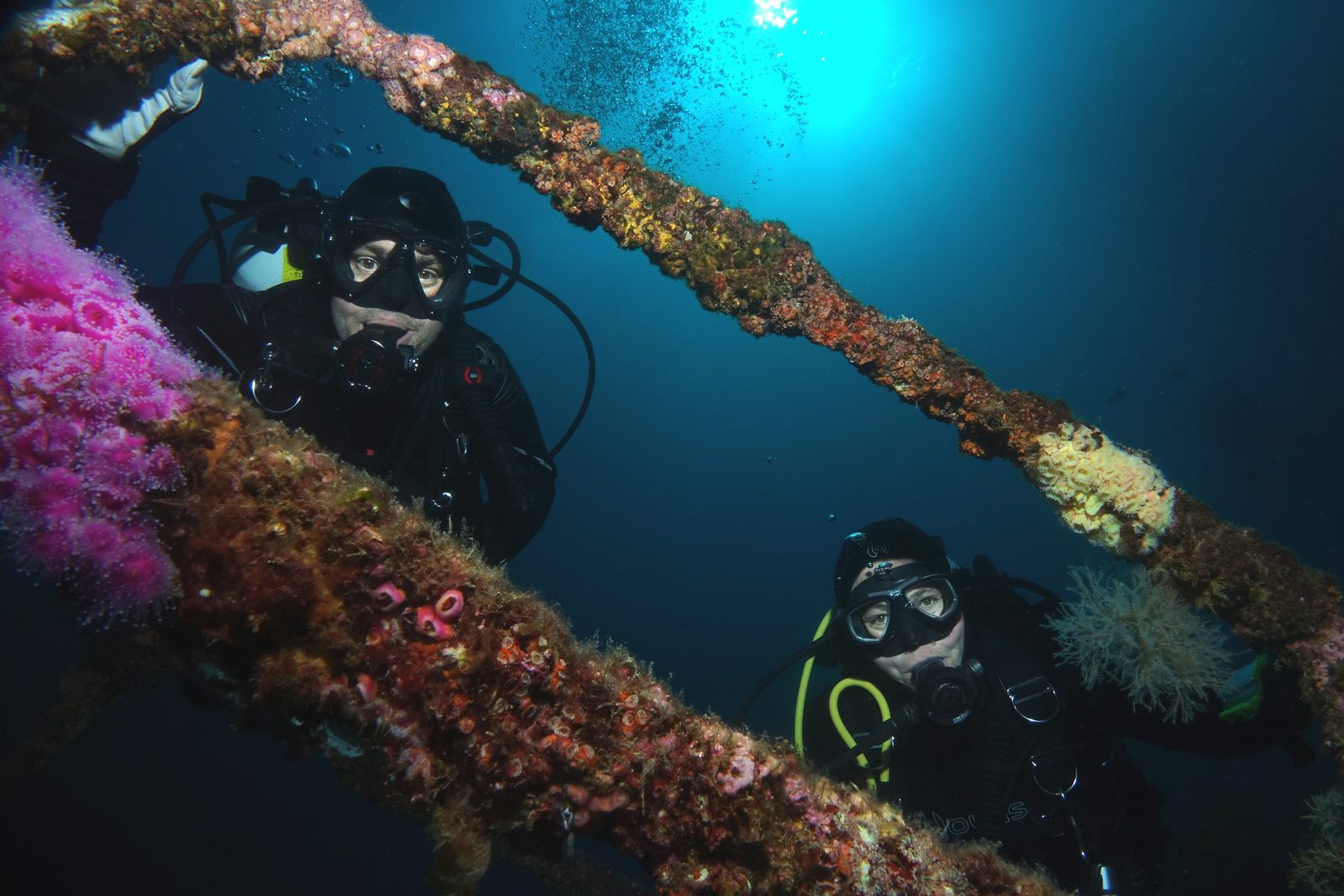
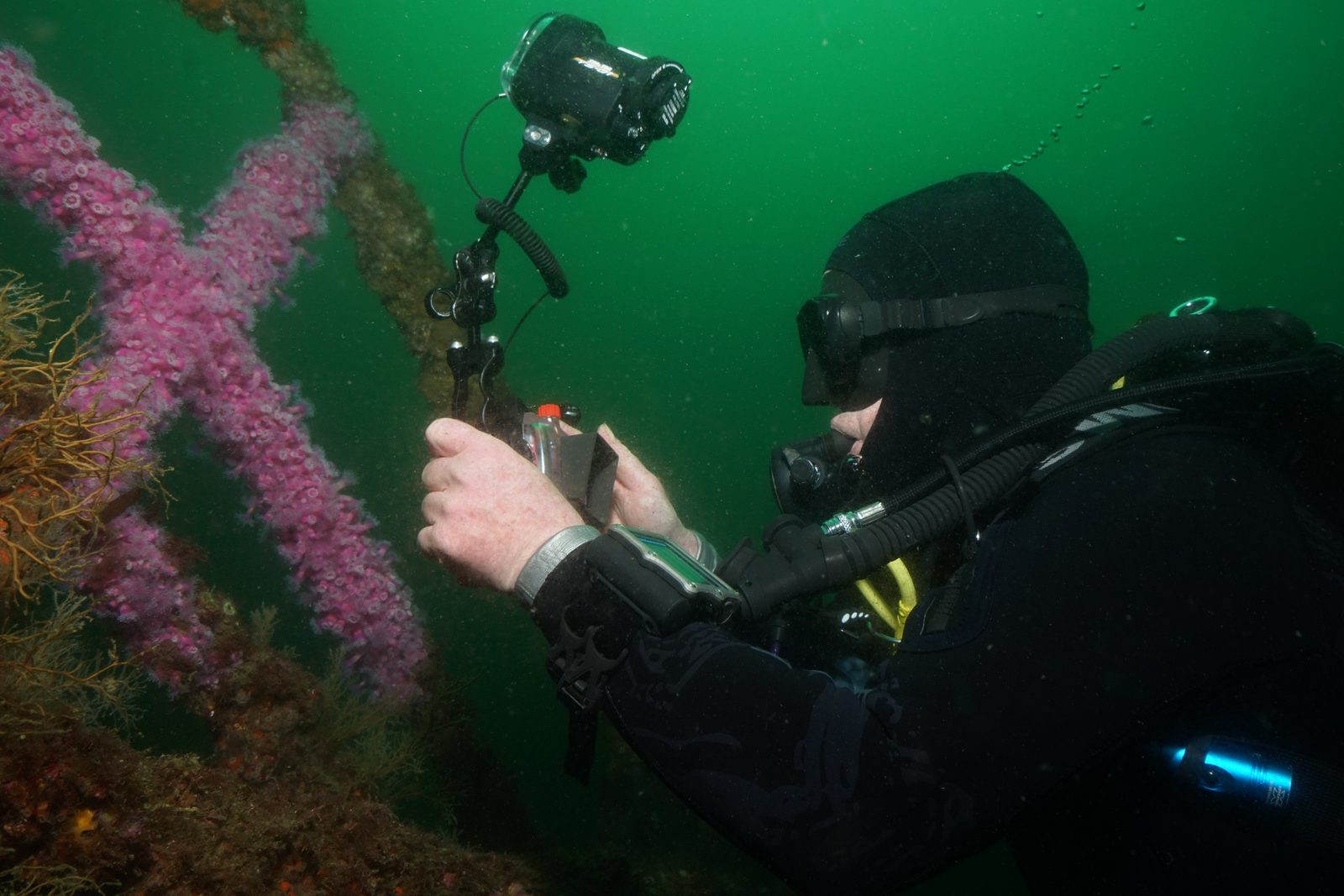
Give a wreck like this a few years and the ocean moves in fast, and on the Canterbury nothing has taken over quite like the jewel anemones. Every rail, cable and stretch of superstructure on this wreck is carpeted in them, and they come in the most ridiculous shade of hot pink you’ll see underwater in New Zealand. Cruise over the radio tower or along the rails on the upper deck and it genuinely looks like someone has thrown a pink blanket over the ship. It’s one of the things divers remember most about this dive, and I always tell people to bring a torch, because the colour just glows under light.
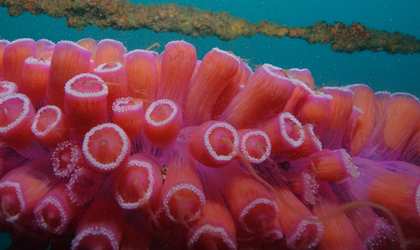
But the pink carpet is only half the story. The Canterbury’s jewel anemones (Corynactis australis) do something most divers never get to see: they spawn, all at once, in winter. It was actually discovered by accident, by divers back in 2009, and it happens like clockwork the day after the first full moon in June or July. For around 40 minutes, the whole colony lets go at the same time: the males release clouds of sperm, the females turn a glowing orange as their eggs become visible, and the water around the wreck goes from a typical 15 metres of visibility down to about 5 as it fills with spawn. It draws in a feeding frenzy too, with sweep, blue maomao, snapper and kingfish all moving in to eat what’s drifting past. It’s a wild, narrow window, and it’s one of the most remarkable things happening on any wreck in New Zealand.
Beyond the anemones, there are already resident schools of fish hanging around the bridge and the funnel, and the growth on the hull only gets thicker every season I take divers back out there.
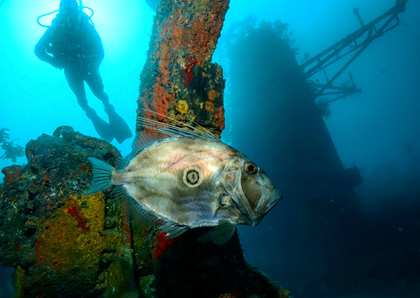
Because she’s so intact, the Canterbury is one of the best wide-angle wrecks in the Bay, the whole silhouette of the ship, divers hovering by the bridge, that sort of shot. If you’re more into your macro, the anemones and the swim-throughs are both worth a proper look, there’s usually something tucked into a corner if you slow down and search for it.
Not Just Another Wreck Dive
We run the Canterbury as a full day out. We’re on the water by 7:45am for the 30-minute run out to Deep Water Cove, and the wreck is normally the first dive of the day while everyone’s fresh. After that we head to one of the nearby reefs for lunch, a snorkel, and a second dive, and we’re usually back at the wharf by around 3:30pm.
It’s not a hard dive to plan for. The cove is protected in most conditions, and visibility out there is often excellent, anywhere from 8 to 30 metres depending on the day (bar those 40 wild minutes in winter). But like any wreck, respect goes a long way: stick to the areas you’re certified for, and let the ship do the talking.
You don’t need to be an Advanced diver to do this wreck, we have great instructors that can dive with you. It then counts as the Deep Dive towards the Advanced certification. So if you’re keen to get amongst one of Northland’s best wrecks, the Canterbury should be on your list. Get in touch and we’ll get you out there.
Recent Comments